

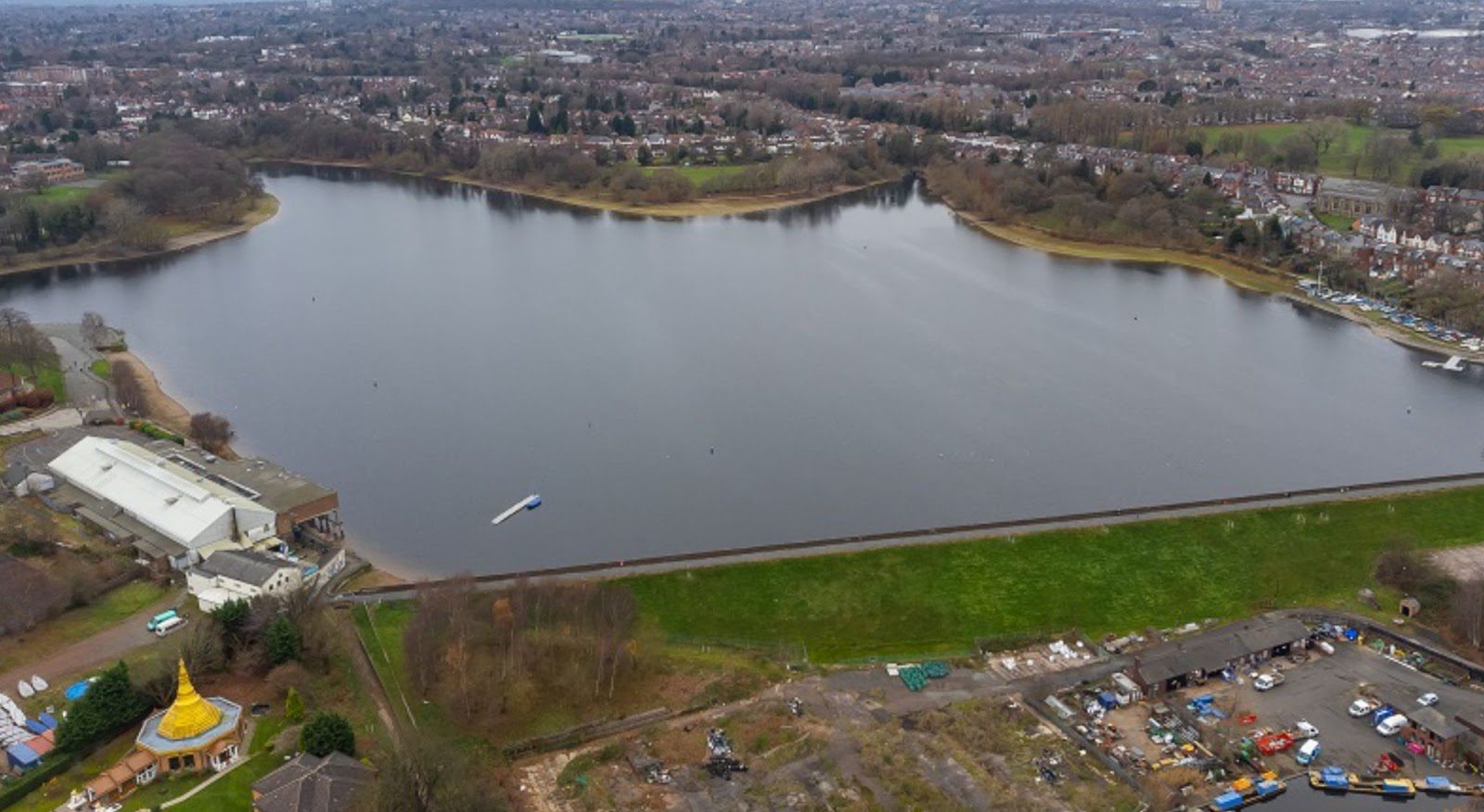
The Edgbaston Reservoir, covering 70 acres, is both a local nature reserve and a protected conservation site, featuring predominantly open water. Built by Thomas Telford in 1827 to supply Birmingham’s canal network, the reservoir remains in active use today. However, beyond its original function, it has evolved into a recreational paradise.
Visitors can enjoy a 1.75-mile (2.8 km) trail, passing through woodlands inhabited by woodpeckers, newts, and bats. Among the most popular activities here are fishing, sailing—home to the Midland Sailing Club—and rowing, with the Birmingham Rowing Club operating on the reservoir.
The main entrance and car park are at the end of Reservoir Road, with pedestrian entrances at Rotton Park Road, Icknield Port Road, and Gillott Road. The car park opens at 8 AM and closes at dusk. Learn more about The Edgbaston Reservoir at birminghamname.com.
A Paradise for Walkers and Runners

Spanning 70 acres, Edgbaston Reservoir is an idyllic retreat for those who love walking, running, and nature. The 1.75-mile trail that circles the reservoir is ideal for joggers and casual walkers alike.
Apart from being a recreational hub, the reservoir is also an ecologically significant site, hosting diverse bird species as well as acting as a sanctuary for newts and bats. Originally, the area was a small water body known as Roach Pool, which was expanded in 1827 under the vision of Thomas Telford.
Today, Edgbaston Reservoir remains ecologically valuable, offering a rich habitat for wildlife, alongside being a heritage landmark and a centre for water sports and outdoor recreation.
Thomas Telford’s Vision

In the early 19th century, Britain needed a modern 250-mile highway without steep inclines, equipped with numerous stops for changing horses. The Romans had previously laid the foundation for such a route, known as Iter Secundus, later renamed Watling Street by the Saxons.
During the 1820s, the British government invested heavily in the Holyhead Road, now known as the A5, under the supervision of Thomas Telford, often referred to as the “Colossus of Roads”.
This was one of Telford’s greatest projects, culminating in the construction of the Menai Suspension Bridge. Along much of the route, the Scottish engineer left his signature in the form of milestones, toll houses, and characteristic gateways.
Telford’s disappointment, however, would have been immense had he seen the modifications to his beloved road near Coventry. In Allesley, for instance, the local parish installed a crude water pump beside the road, leaving the surrounding area untidy and disorganised.
This was a sharp contrast to the meticulous planning that had gone into constructing the road, which included carefully designed pathways for villagers, aimed at compensating for the disruptions caused by construction.
Meeting Local Residents’ Expectations
This scenario could easily be compared to the challenges faced by modern contractors, pressured by both engineering demands and public concerns.
During construction, Telford went to great lengths to ensure minimal inconvenience for the residents of Allesley. He built new access roads to all homes, including the local church, installed new railings, and painted them meticulously.
However, the villagers retaliated by reinstating their unsightly water pump and a drinking trough for horses. Since the main road to Wales was now only 27 feet wide, any stopped wagon could block the path of a passing carriage.
Though Telford’s aim was to modernise infrastructure, the Allesley villagers clung to tradition. The Allesley Well, known as St. Margaret’s Spring, had been in use since the 16th century. The main road to Holyhead and Birmingham passed through it for centuries, and local opposition to change was strong.
A Home for Boating Clubs
The Allesley water pump, which Telford criticised so harshly, no longer exists—it collapsed into the well several years ago. However, to preserve the village’s historical connection to its ancient water source, a replica of a 19th-century pump was installed in 2005, supported by the Allesley Conservation Society and Coventry City Council.
This modern version can still dispense fresh water, but only on special occasions. Today, the residents of Allesley rely on a far more modern invention—running tap water.
Ultimately, visiting Edgbaston Reservoir offers a wonderful way to spend a sunny day. In addition to its boating heritage, the reservoir is home to several rowing and sailing clubs, including:
- Birmingham Rowing Club
- University of Birmingham Boat Club
- Midland Sailing Club
Beyond rowing and sailing, visitors can enjoy windsurfing, kayaking, and other water sports. The nearly three-kilometre trail around the reservoir is perfect for leisurely strolls and running, all while soaking in the surrounding nature.