

Park · Birmingham · ⭐ 9.5/10 · 10633 reviews · updated: 2026-08-04 15:57:32
Address: Park Rd, The Royal Town of Sutton Coldfield, Birmingham, Sutton Coldfield B74 2YT, United Kingdom
Sutton Park — heath, water and a Roman road on the city’s northern edge
Six miles north of Birmingham city centre the streets of Sutton Coldfield stop at a gate, and roughly 2,400 acres of open country begin. Sutton Park is a National Nature Reserve, a Site of Special Scientific Interest and, over large parts, a Scheduled Ancient Monument — the same category of protection as Stonehenge. Heathland, valley bog, ancient woodland and seven pools are stitched together by a Roman road that was already old when the deer park was enclosed around it. It is one of the largest urban parks in Europe, bigger than London’s Richmond Park, it takes over two million visits a year, and it has belonged to the townspeople by royal charter since 1528.
Highlights
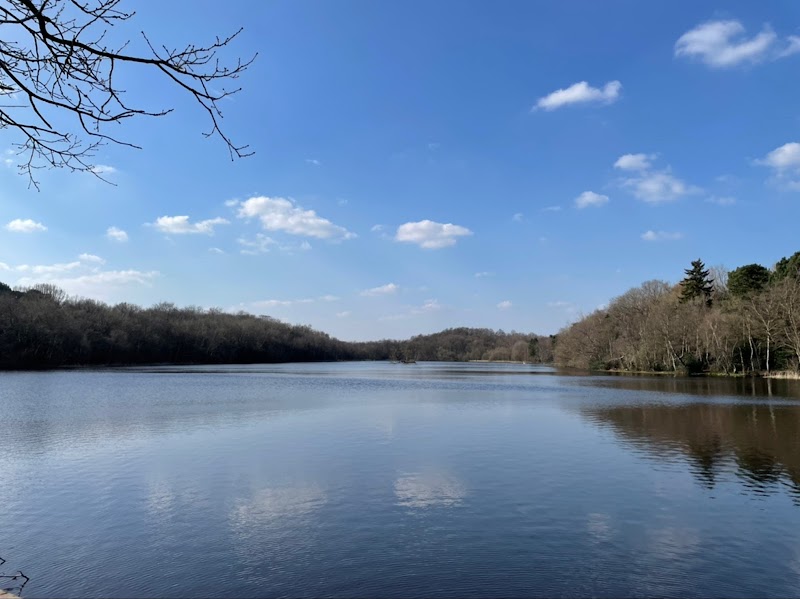
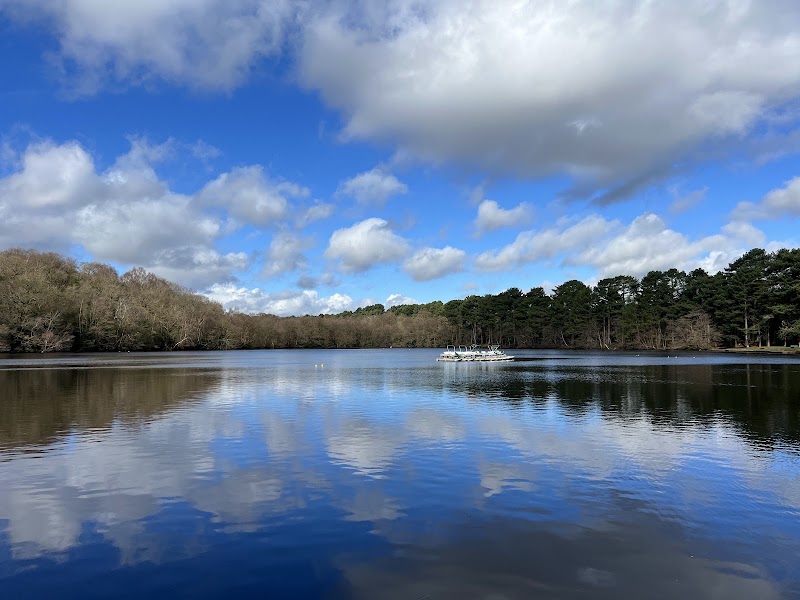
- The seven pools — Wyndley, Keeper’s, Bracebridge, Little Bracebridge, Blackroot, Powell’s and Longmoor, dammed across six centuries and mostly built to drive mills. Wyndley may be twelfth-century or earlier, Keeper’s and Bracebridge fifteenth, and Powell’s, Longmoor and Blackroot eighteenth; Powell’s is the largest at about thirty acres and carries the sailing.
- Icknield Street — a Roman road, also called Ryknild Street, running arrow-straight for some two miles through the park on a first-century alignment between the fort at Metchley and Wall near Lichfield. The raised agger, the side ditches and the quarry pits dug to build it are still legible in the turf, which is rare for a road of that age anywhere in Britain.
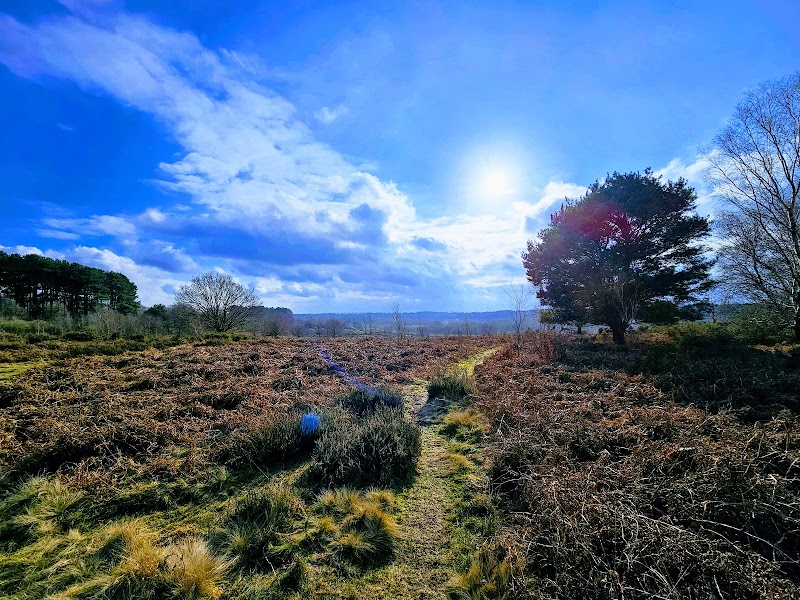
- Lowland heath — among the finest surviving in the West Midlands, carrying ling heather, bell heather, cross-leaved heath, marsh gentian and round-leaved sundew, with orchids in the wetter ground.
- The Seven Hayes — the park’s enclosed woods: Streetly Wood, Pool Hollies, Darnel Hurst, Upper Nut Hurst, Lower Nut Hurst, Holly Hurst and Lady Wood, medieval in origin and still ringed by their banks, ditches and old quickset hedges. Gum Slade, probably eighteenth-century, holds the veteran hollies and is the park’s strangest corner.
- Free-roaming livestock — Exmoor ponies, introduced to the Bracebridge area in July 1999 with five fillies and three mares into an eighty-acre enclosure, now grazing year-round north of the railway, plus a summer cattle herd on the southern heath. Their grazing is the reason birch has not swallowed the open ground.
- The Jamboree pillar — a stone marker for the 9th World Scout Jamboree of August 1957, when 33,000 Scouts from 85 countries camped in the park for twelve days.
What you’ll find
Nothing here is manicured. The park reads as countryside a city grew around, not as a garden a city laid out, and roughly a quarter of it is under trees.
- Open heath and acid grassland — the dominant landscape, big skies, and a genuine purple flush when the heather flowers.
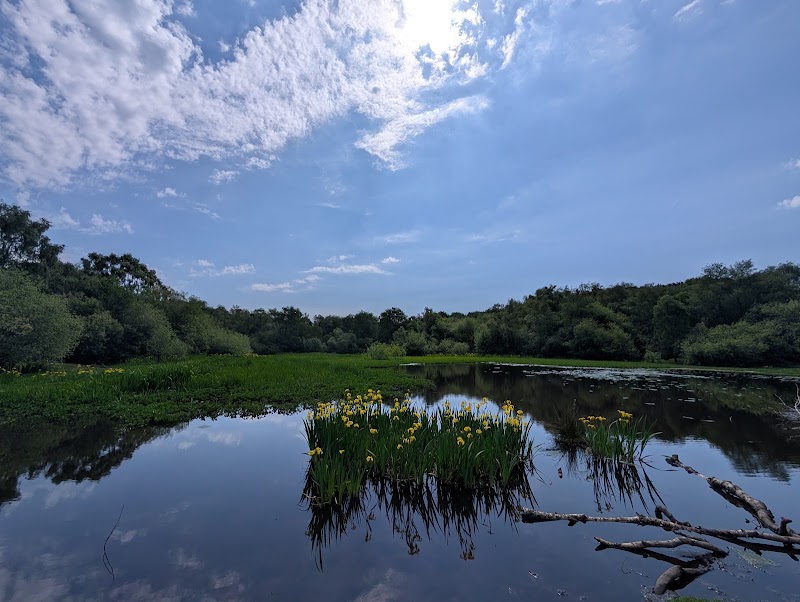
- Wetland — valley bog, marsh and reedbed, with great crested newts, kingfishers, twelve dragonfly species and twenty-nine butterfly species recorded, the holly blue among them.
- Ancient and secondary woodland — oak, birch and holly, with redstarts, warblers and all three British woodpeckers breeding; fallow deer keep to the wood edges.
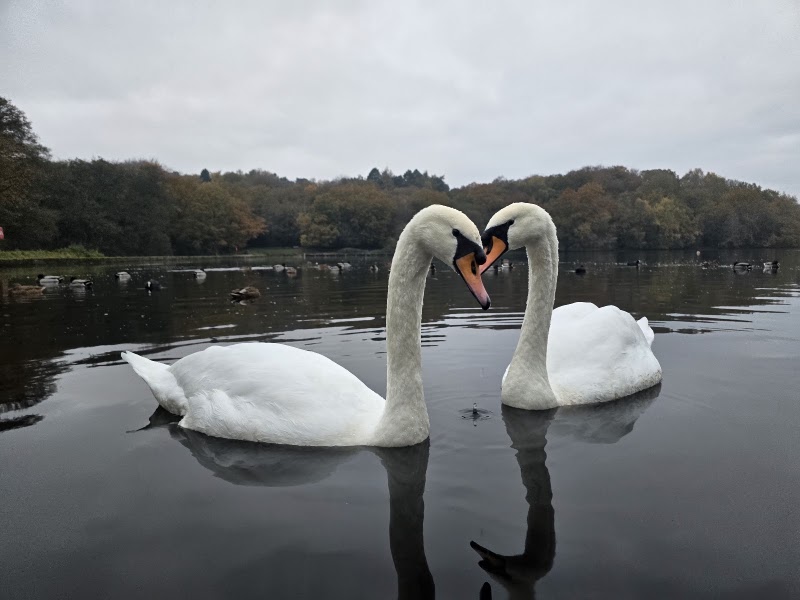
- Water — the seven pools, fished for coarse species under permit, with sailing at Powell’s and rowing on the water near Wyndley.
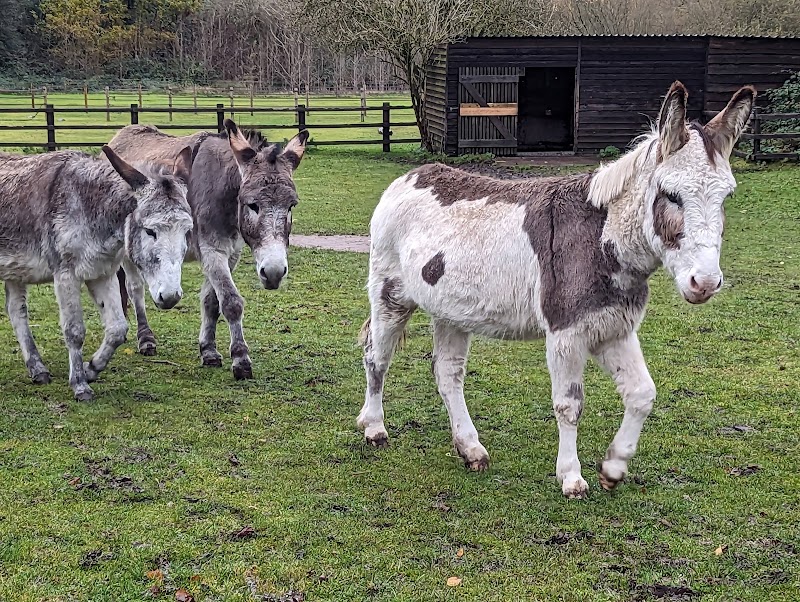
- Facilities — a visitor centre and rangers’ base at Town Gate with accessible toilets, displays and maps, a donkey sanctuary alongside it, two golf courses, play facilities near Wyndley, a model aircraft flying field near Boldmere Gate, and seasonal kiosks.
- Seven main gates — Town, Wyndley, Boldmere, Banners, Streetly, Four Oaks and Blackroot, each opening onto a different landscape.
Things to do — and who it’s for
- Long-distance walkers — a full boundary circuit runs eight to nine miles, while the Holly Hurst loop through oak and birch is a manageable three and a half.
- Birdwatchers — more than 140 species recorded, including all three British woodpeckers, woodcock, hobby, redstart and grasshopper warbler, with the heath and the pool margins the productive ground.
- Runners — a free weekly 5km parkrun starts at Banners Gate, and the park hosted the triathlon at the 2022 Commonwealth Games, swimming leg included.
- History walkers — the Roman road, the medieval pool dams, the wood banks and the prehistoric burnt mounds add up to a legible archaeological circuit; flint tools have been found near Bracebridge Pool and Rowton’s Well, marking ancient camps.
- Families and visitors with limited mobility — the Wyndley side has the gentlest paths and the shortest walk from a gate to water, and two Trampers, all-terrain mobility scooters, can be booked from the visitor centre, currently without a hire charge.
- Cyclists and anglers — riding is permitted on designated bridleways rather than across the heath; fishing needs both a rod licence and a council permit.
Getting there & practical
The park sits on the western edge of Sutton Coldfield, about six miles north of Birmingham city centre. The Cross-City Line from Birmingham New Street is the simplest approach: Sutton Coldfield station is a short walk from Town Gate, while Four Oaks serves the northern side and Wylde Green the southern. Several bus routes reach the gates from Sutton Coldfield town centre and from Erdington. Entry on foot is free, as it has been by charter for close to five centuries, and the gates are open every day; car parks inside the park charge, with permits available for regular visitors. The visitor centre at Town Gate opens through the year, roughly 10am to 6pm in summer and 10am to 4.30pm in winter. Allow two hours for a pool-to-pool walk, half a day to cross the park properly, and a full day for the boundary circuit. Two things to plan around: a working freight railway still crosses the park on the 1879 alignment, and the pools are unsupervised open water.
When to visit
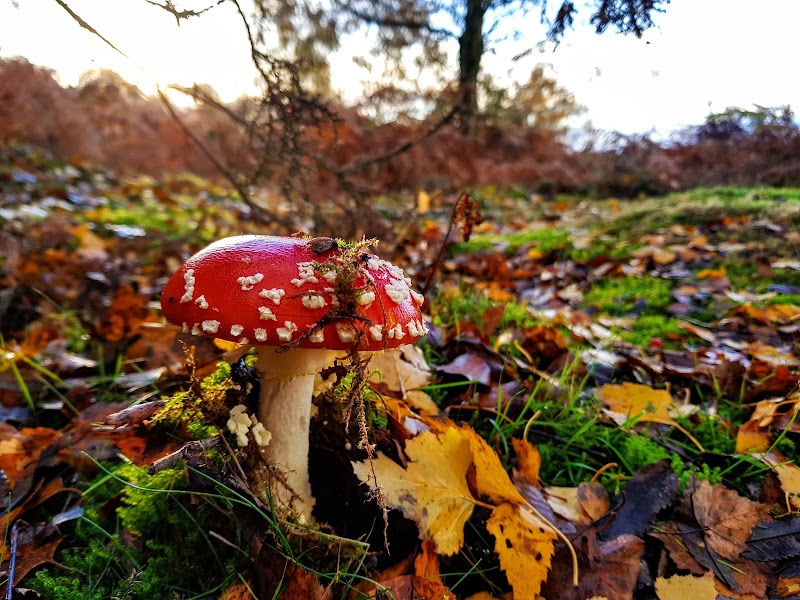
Spring turns the wet ground green and fills the hayes with birdsong as migrant warblers and redstarts arrive; it is also the heath’s most fragile season, with birds nesting directly on open ground within metres of the paths. Summer is the season of the cattle, of long light lying on the pools, and of the park at its busiest around Wyndley and Blackroot — walk ten minutes north and it empties. Late August into September is the one date genuinely worth planning for, when the heather flowers and the open ground turns properly purple; dragonflies are still working the bog margins. Autumn brings fungi under the oaks, colour through the birch, and the best chance of catching fallow deer at the woodland edges in the first hour of light. Winter is bleak in the good sense: frozen pool margins, bare heath, enormous skies, few people, and boots that will need cleaning afterwards.
Good to know
The park is a survival rather than a creation. It was royal forest under the Mercian kings, was enclosed as a Norman deer park in the early twelfth century, and by the fifteenth was declining along with the town beside it. The rescue came from John Vesey, born John Harman, Bishop of Exeter and a Sutton Coldfield man, who petitioned Henry VIII on his home town’s behalf. The charter of 1528 incorporated Sutton Coldfield as a Royal Town and vested the park in its warden and society for the free use of the inhabitants — which is why walking in still costs nothing nearly five centuries later. Charcoal burning in the woods is thought to have given the town the second half of its name. The pools were dammed or adapted across the centuries that followed, most of them to power mills. A railway was cut across the park in 1879; the Sutton Miniature Railway ran from 1892 into the 1960s, and the full-size passenger station closed in 1964, though freight still runs. In August 1957 the park held the 9th World Scout Jamboree, marking fifty years of Scouting and the centenary of Baden-Powell’s birth: it was opened by the Duke of Gloucester, visited by Queen Elizabeth II and closed by Olave, Lady Baden-Powell. The BBC Radio 1 Roadshow drew around 100,000 people here in 1992. The Friends of Sutton Park Association has worked on the park since 1950, and English Nature declared the National Nature Reserve in 1997.
Visitor tips
- The cattle and Exmoor ponies roam free and are not tame. Keep a wide distance, never feed or touch them, keep dogs under close control, and give any cow with a calf the whole width of the path and more — these are large animals in open country, feeding them damages the conservation grazing, and their behaviour cannot be predicted.
- Wear boots you don’t mind ruining. Off the surfaced routes the heath holds water for weeks after rain, and the valley bog is genuinely boggy rather than picturesquely damp.
- From March to August keep to the paths on open heath. Ground-nesting birds are much of the reason this is a National Nature Reserve, and they nest exactly where it looks as though there is nothing at all.
Questions & answers
How big is Sutton Park? About 2,400 acres, roughly 970 hectares — one of the largest urban parks in Europe and larger than Richmond Park in London. It takes more than two million visits a year.
Is it free to enter? On foot, yes, and it has been by royal charter since 1528. The car parks inside the park charge, and permits exist for frequent visitors.
Are the ponies and cattle safe to approach? Treat them as wild animals. They roam freely, they are not handled by the public, and the guidance is to keep well clear and never feed them.
Is there really a Roman road? Yes. Icknield Street, also called Ryknild Street, crosses the park for about two miles on a first-century alignment between the forts at Metchley and Wall, and its earthworks are still visible.
Can you swim in the pools? No. They are unsupervised open water. Coarse fishing is allowed on designated pools with the correct licence and permit, and sailing operates at Powell’s.
What wildlife might I actually see? Fallow deer at the wood edges, Exmoor ponies and cattle on the heath, kingfishers on the pools, and, in season, dragonflies and butterflies — twelve and twenty-nine species respectively have been recorded.
Is it accessible? Partly. The visitor centre at Town Gate has accessible toilets and maps, and two all-terrain Trampers can be booked there; away from surfaced routes the ground is rough and often wet.
What is the nearest station? Sutton Coldfield on the Cross-City Line, walking distance from Town Gate; Four Oaks and Wylde Green give access to other sides of the park.
Photos
Show 1 more photos
Visitor reviews
Reviews last updated: 2026-08-04 15:57:32
Data is refreshed monthly. Sources: birminghamname.com and editorial picks based on reviews.
Sutton Park in Birmingham was honestly such a wonderful experience
The park is simply enormous, with beautiful lakes, open green spaces, quiet woodland walks and so much nature everywhere. It was one of those places…
⭐⭐⭐⭐⭐
Sutton Park is one of the best places for outdoor activity and recreation.
It's perfect for walking, jogging and all kinds of exercise. The park is enormous, with beautiful paths that make every walk enjoyabl…
Sutton Park is a wonderful place to explore and even to get lost in! There are lots of interesting historical landmarks and clearly marked routes. There are also lots of wild places where you can get lost! And lakes to e…
Sutton Park is enormous. So enormous that I didn't have time to explore everything there was to explore. I'm reliably informed that there are seven lakes on the site; I only found one of them. It reminded me of the "Grea…
A wonderful place, a place of calm and nature. If you want to immerse yourself in nature and get away from the noise, this is the place for you.