

Birmingham’s skyline is rapidly changing, and sustainability is a key criterion for new projects. Using a framework of environmental checks and balances, city planners and council members are ensuring that architectural ambitions align with a minimal long-term planetary impact. Indeed, these “green” buildings could be crucial in helping Birmingham City Council achieve its goal of net-zero carbon emissions by 2030. For more on recent green building initiatives in the city, visit birminghamname.com.
One Centenary Way
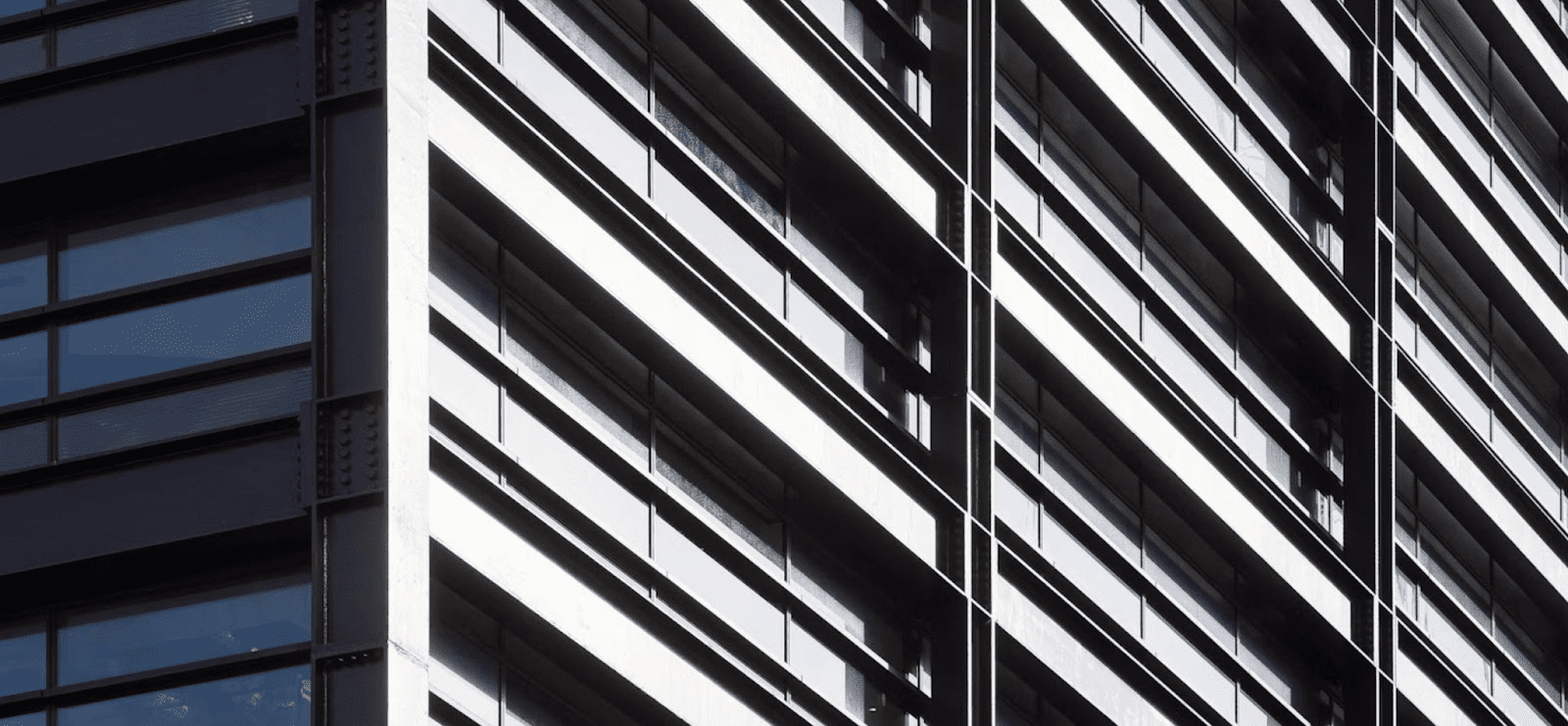
A cornerstone of the Paradise redevelopment, One Centenary Way is known for its distinctive yet highly efficient structural solution to navigate complex underground constraints, including the A38 Queensway tunnel.
Unable to rely on a traditional load-bearing wall, the new building’s facade achieves structural stability through a Vierendeel exoskeleton. But in any case, One Centenary Way has become more than just another building in the Paradise redevelopment; it’s a landmark and an exceptionally eco-friendly commercial space in the heart of Birmingham.
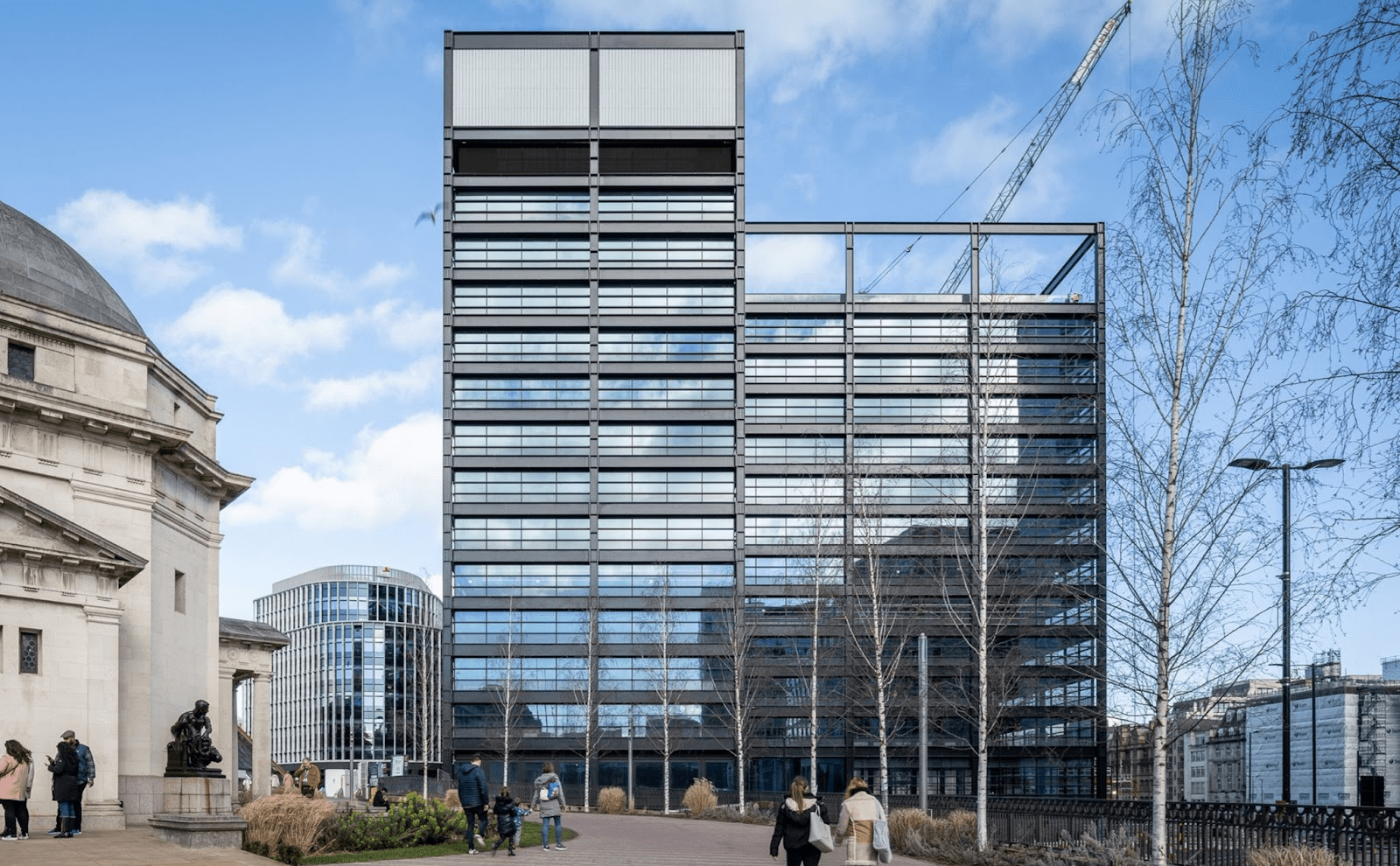
Consider this: One Centenary Way, designed by Birmingham-based Howells with input from Arup, is a 223-foot-tall, 13-story commercial building spanning 280,000 square feet, featuring a bar and restaurant on its ground floor.
Another unique feature relates to its construction. The building’s steel exoskeleton allows it to span the A38 Queensway tunnel – a unique engineering feat dictated by its location. Crucially, the highway running directly beneath the site remained operational throughout the construction period.
Completed in 2023 by contractor Sir Robert McAlpine, the building anchors the Paradise development, overlooking Centenary Square and Broad Street. Above all, One Centenary Way is a remarkable addition to Birmingham’s ever-evolving cityscape, delighting locals and visitors alike.
The building’s basement houses Birmingham’s first dedicated cycle hub, with space for 400 bicycles, showers, storage, and maintenance facilities, all accessible to the public.
The Building’s Green Credentials
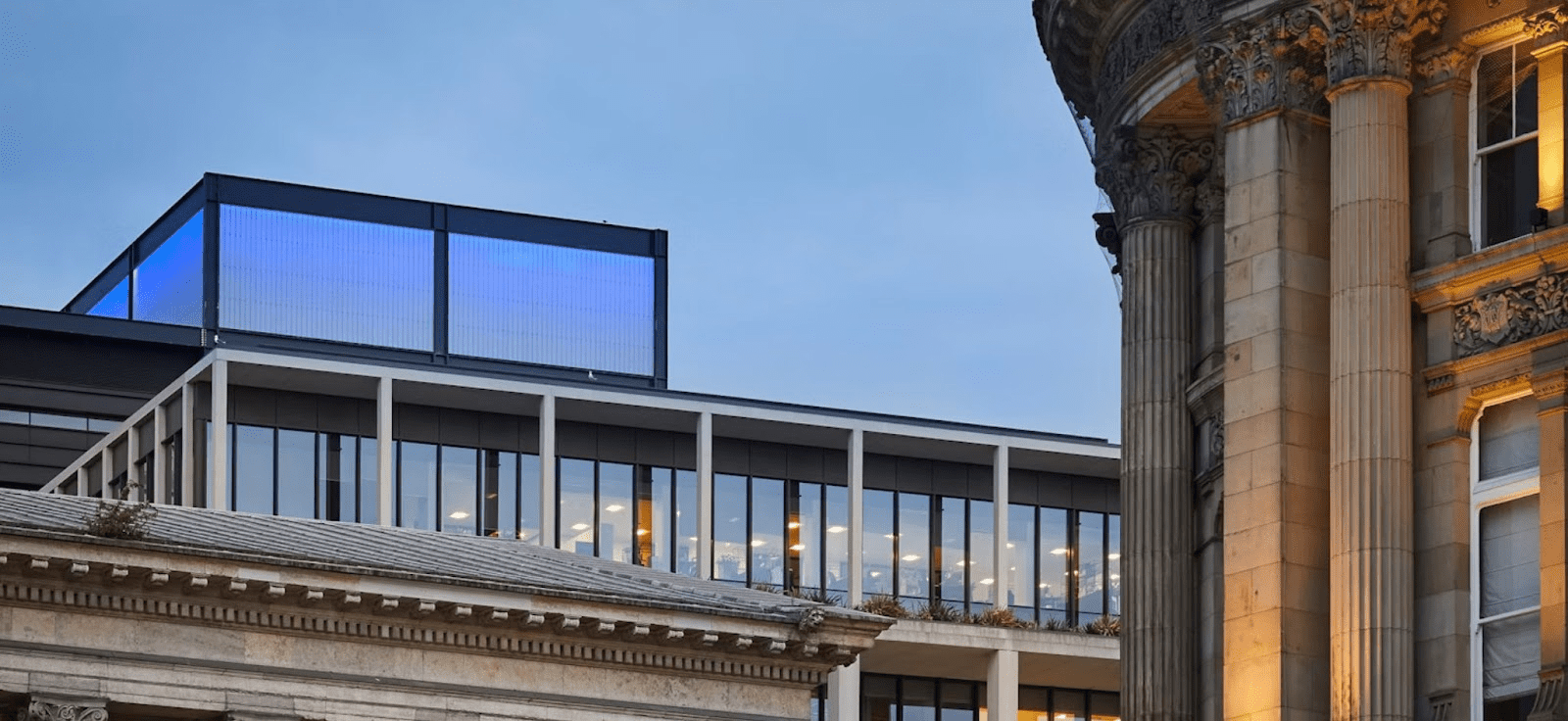
Now, for the main event: sustainability. Environmental consulting firm Arup has relocated its Midlands team – a team of 1,000 employees, no less – into this building. In early 2024, global banking group Goldman Sachs and real estate consultants JLL joined them. Upon completion, only one and a half floors remained available.
Thanks to its all-electric heating, hot water system, and SMART access to services, information, and facilities, One Centenary Way is an exceptionally environmentally friendly space, helping Birmingham move towards its net-zero carbon goal.
Overall, maximizing sustainability and reducing embodied carbon were central to the design process. This, in turn, led to a structural design that minimizes concrete foundations and superstructure, and incorporates fully recyclable steel manufactured in the UK by BHC Steel using hydropower.
By following this eco-conscious manufacturing route from factory to site and switching to rolled steel sections, this approach saved 900 tons of CO2 and reduced the building’s overall carbon footprint.
Acting like a giant bridge, sixteen single-story steel trusses transfer the building’s load to either side of the tunnel, supporting a podium slab upon which the shear-resistant exoskeleton sits. In close collaboration with Arup engineers, a structure was developed that addresses the site’s logistical challenges, to put it in architectural terms, while also celebrating Birmingham’s metalworking heritage.
An 8-meter (approximately 26-foot) lantern atop the building, built into the facade’s structural grid, features a dynamic 360-degree light display visible for miles. This lantern bestows a stunning, colorful crown upon Birmingham’s skyline. The lantern acts like a celestial beacon, making a statement with an important feature: its light display capable of shining in over a million different colors.
The building’s design also utilizes a column-minimized 12×9 meter grid, mirrored by facades composed around another 3-meter grid that has a strong horizontal emphasis.
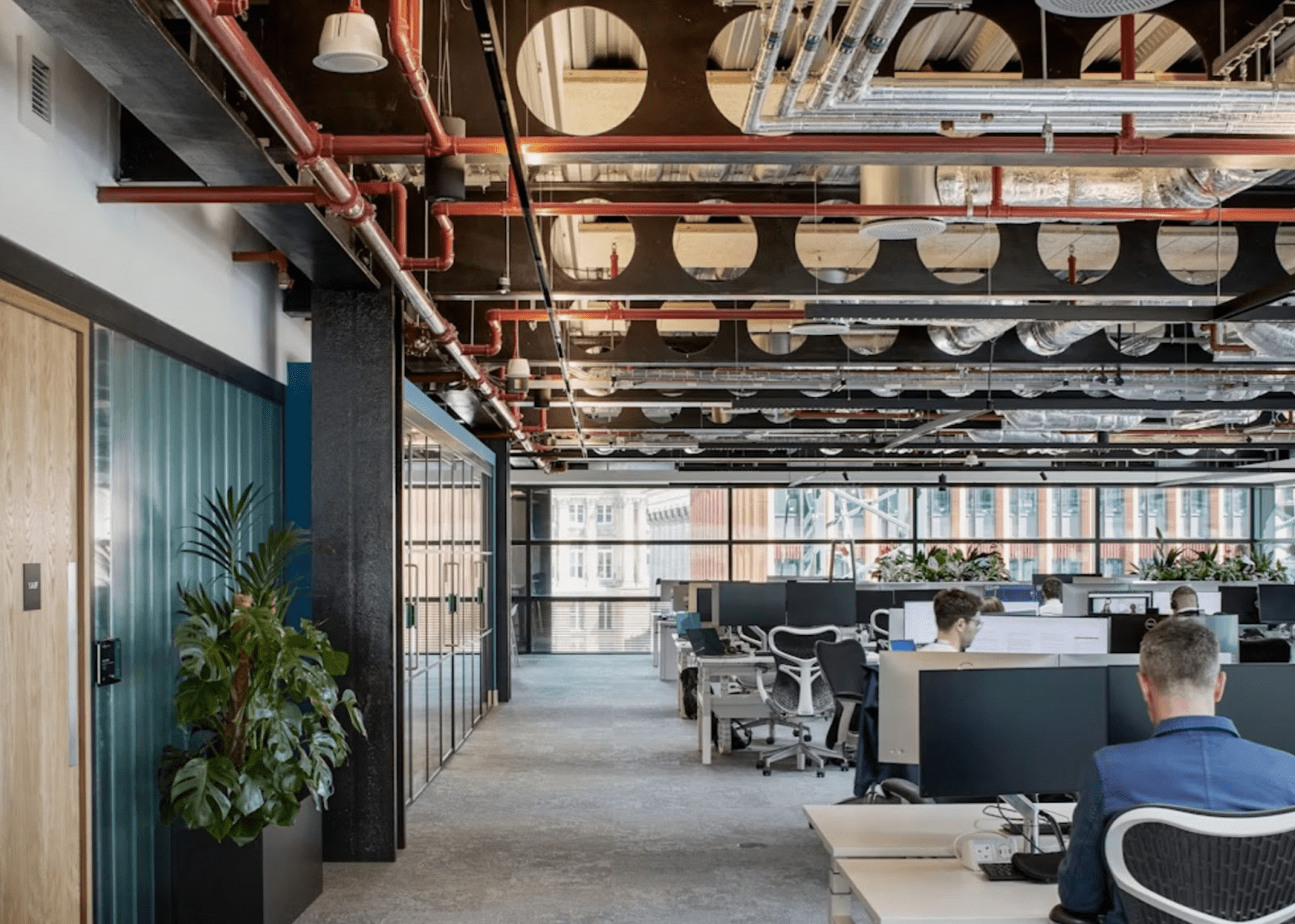
Regarding the interiors, in line with the structurally expressive exterior, the internal spaces of One Centenary Way feature exposed steel frames complemented by the materiality of natural textures and custom-made fittings. The all-electric scheme includes smart building technology that gathers real-time data on energy consumption and facility usage, enabling efficient use of electricity, water, and other amenities.
Floor plates of up to 22,500 square feet and a stunning twelfth-floor terrace overlooking Centenary Square make the building a significant new landmark for the city, positively impacting the urban landscape.
Dedicated Cycle Hub
The space between One Centenary Way’s giant transfer trusses has been ingeniously utilized to create an accessible cycle hub for the entire complex. Achieving this by occupying a space that eloquently showcases the building’s structural audacity, and doing so in vibrant colors, was a straightforward design choice.
In total, this is Birmingham’s first major cycle hub, capable of accommodating up to 400 bicycles. Beyond secure, covered parking, it offers a new level of convenience for cyclists, including a service center for maintenance and bike rentals.
This facility represents an effective approach to creating a vibrant new amenity in the heart of Birmingham. One Centenary Way is already demonstrating its potential to become a city landmark and a gateway to its future development.
Ambitious Plans
But One Centenary Way isn’t the last such building for Birmingham. Also in 2023, planning permission was granted for a new 17-story, 152-bedroom hotel on the corner of Paradise Street, as well as a new public square and several new pedestrian streets.
The nearly 2 million square foot site will eventually feature up to ten flagship, eco-friendly buildings offering offices, shops, bars, cafes, restaurants, a high-quality hotel, and Octagon, the world’s first 49-story pure octagonal residential tower, all set within 17 acres in the city center.</p
The entire Paradise redevelopment is being delivered through Paradise Circus Limited Partnership, a private-public joint venture with Birmingham City Council. Private sector funding is managed by international business Federated Hermes, in partnership with the Investment Board.
It’s worth noting that construction projects are deemed successful if they can minimize CO2 emissions throughout all phases of construction and daily operation.