

Park · Birmingham · ⭐ 8.9/10 · 2830 reviews · updated: 2026-08-04 15:57:35
Address: Holly Rd, Handsworth, Birmingham B20 2BY, United Kingdom
Handsworth Park — a Victorian pleasure ground brought back from the brink
Sixty-three acres of lakes, avenues and open lawn sit three miles north-west of the city centre, split down the middle by a working railway line. East of the tracks lies the formal Victorian half: a broad boating lake with a wooded island, a listed bandstand, a lodge with a clock-tower turret. West of them are quieter greens, a full-size cricket ground and heavy old trees. By the 1990s the park had slid so far into neglect that campaigners were fighting to save it; a £9.6 million rescue brought back the bandstand, the boats, the fountains and the railings, and today the same lawns carry two of the largest community festivals in the country.
Highlights
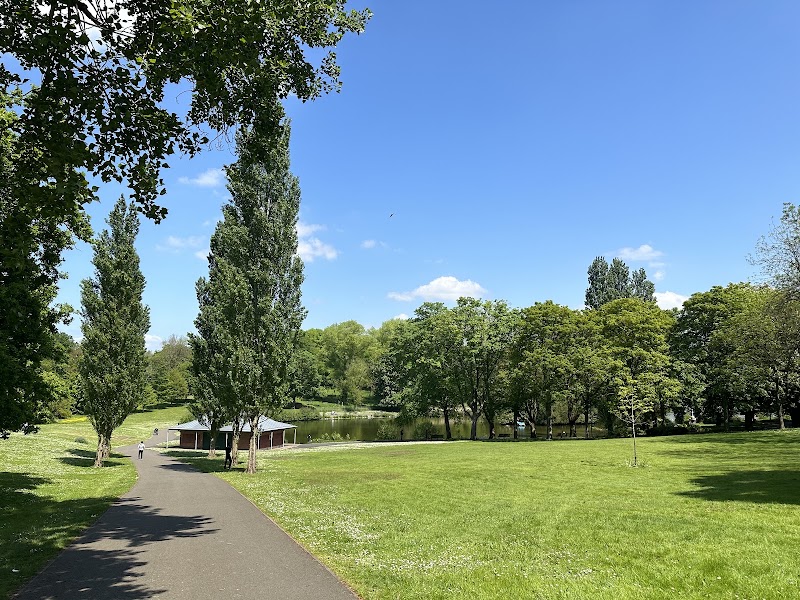
- The boating lake — dug in 1897 to Edwin Kenworthy’s design by damming the Handsworth and Grove brooks, an oval sheet of water with a wooded island at its centre. Its creation drowned the remains of a medieval moat and the pleasure grounds of the old rectory that stood here.
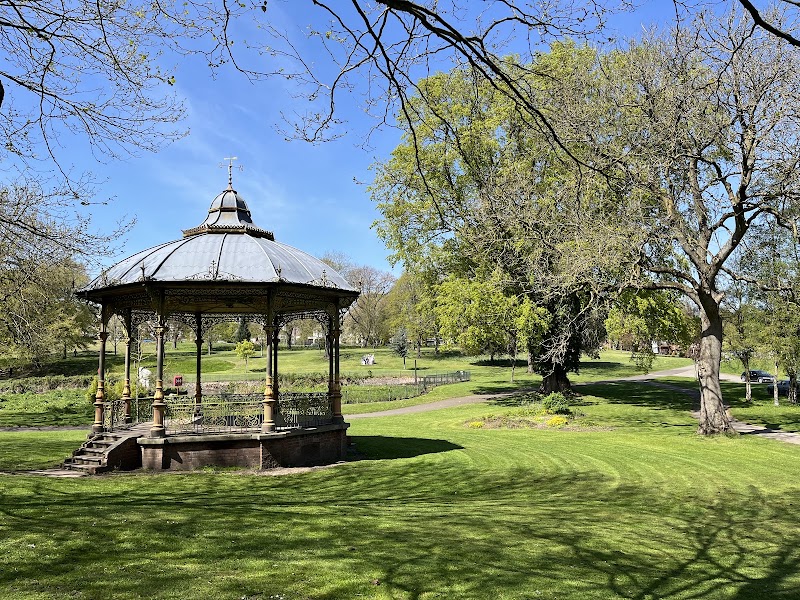
- The bandstand — late-Victorian cast iron, ornate columns carrying an ogee dome that rises in two stages to a weathervane finial, moved to its present position around 1907. Listed Grade II in its own right, it travelled back to the Lion Foundry at Kirkintilloch near Glasgow for restoration and returned in 2005.
- The Boathouse — the lakeside building reworked as a visitor centre and café during the restoration. Rowing and pedal boats returned to the water in June 2009, after decades in which the lake carried nothing at all.
- St Mary’s Church — adjoining the park along its northern edge. The churchyard holds James Watt, Matthew Boulton and William Murdoch, the three men behind the Soho manufactory, along with founders of Aston Villa Football Club.
- The 1897 lodge — a two-storey keeper’s house in brick, tile-hanging and half-timber, crowned by a corner clock-tower turret, put up in the same year as the lake and completed for the opening of the eastern extension.
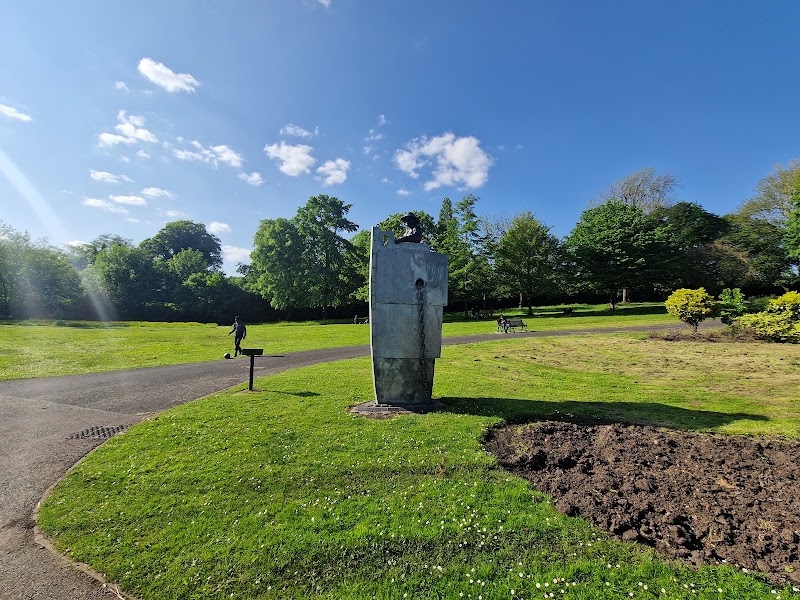
- The Sunken Garden — designed and paid for by the Birmingham Civic Society in 1922. Its centrepiece was a bronze child holding a lamb by John P. Walker, cast by the Burton Foundry in Surrey and unveiled on 15 January 1937; it was stolen in 1988 and never recovered.
What you’ll find
The railway gives you two parks in one, linked by bridges. The eastern half is ornamental and built around water, with the lake, bandstand and formal planting; the western half is broader and greener, given over to lawns, specimen trees and sport. Almost the whole site is level, and the surfaced circuits make a full loop comfortable in about an hour.
- Two bodies of water — the large boating lake east of the line and a smaller ornamental pond to the west, both fed by the brooks that shaped the shallow valley the park occupies.
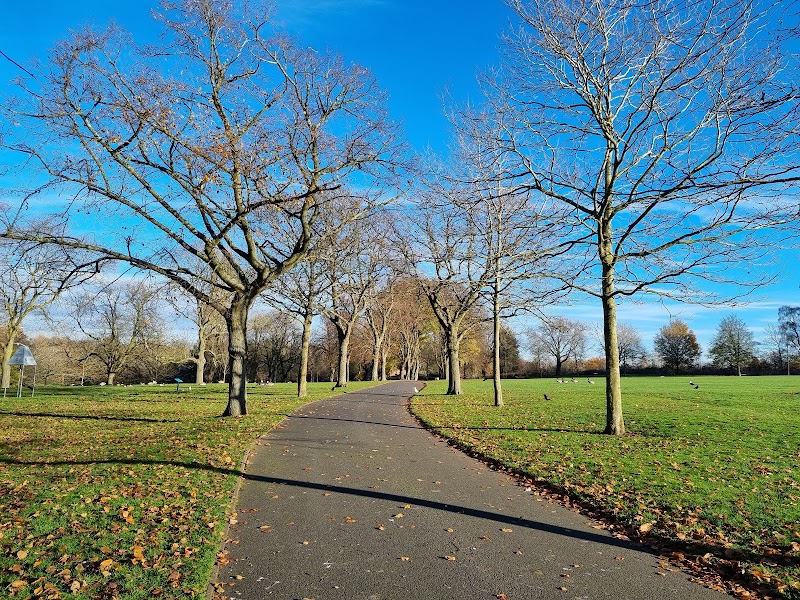
- Broad tree-lined walks of horse chestnut, Lombardy poplar and specimen conifers, with mature planting surviving from the original nineteenth-century layout.
- A full-size cricket ground enclosed by railings, with a mid-twentieth-century pavilion restored during the works and still in club use through the season.
- A bowling green occupying the ground of the park’s former walled garden and tennis lawn, and the Sons of Rest building rebuilt beside it.
- Children’s play areas and a multi-use games area installed during the restoration, plus a leisure centre standing on the footprint of Grove House.
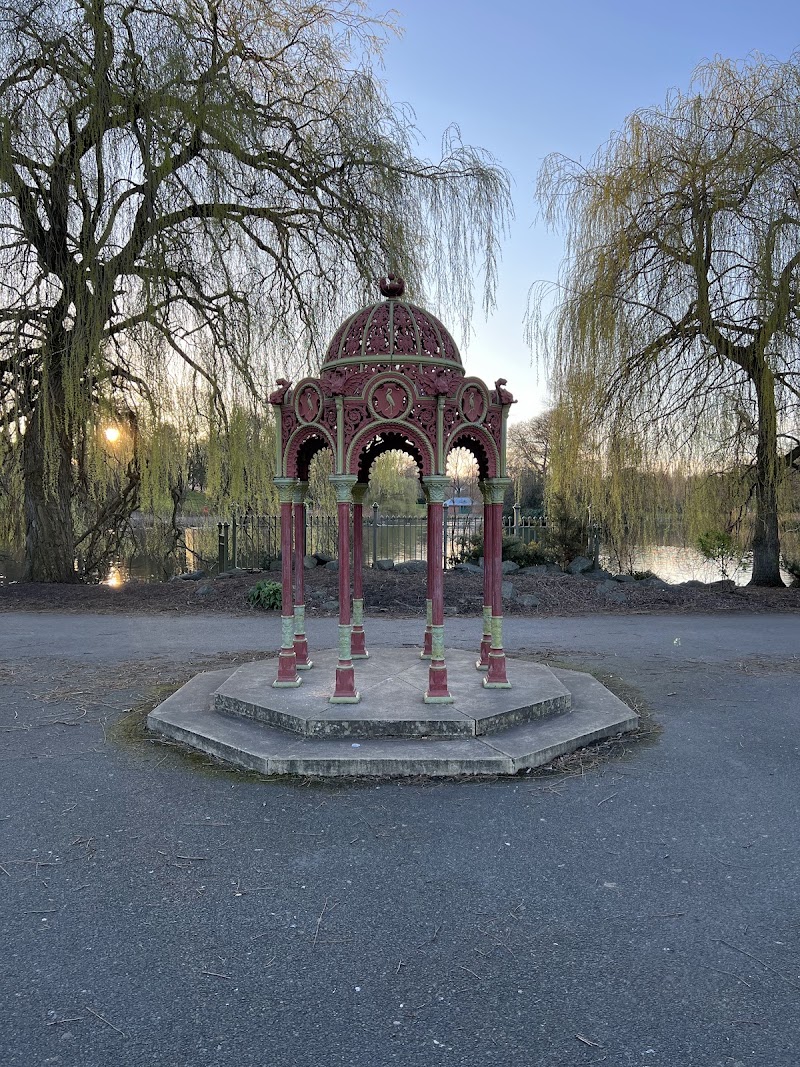
- Restored cast-iron drinking fountains, two ornamental fountains, and the historic gates and railings replaced after the originals went for wartime salvage.
Things to do — and who it’s for
- Families with young children — flat, buggy-friendly circuits around the lake, with play areas and the multi-use games area within sight of the café.
- Boaters — short hire sessions on rowing and pedal boats through the warmer months, on one of the very few working boating lakes left anywhere in the city.
- Festival-goers — Vaisakhi in April, organised by the city’s Sikh gurdwaras and counted among the largest such celebrations in Europe, and the free Simmer Down reggae festival in summer.
- Heritage walkers — a compact circuit strings together the lodge, the bandstand, the Sunken Garden, the restored fountains and the churchyard immediately next door.
- Birdwatchers — herons, grebes, coots and moorhens work the island and the reedy margins, and the open water pulls in large gull roosts through the winter.
- Cricketers and bowlers — organised club sport still runs on ground the Victorians marked out for exactly that purpose, on both the pitch and the green.
Getting there & practical
The park sits in Handsworth, north-west of the city centre and roughly fifteen minutes out by bus. West Midlands Metro trams serve the district on the line running out towards Wolverhampton, Hamstead railway station lies to the north on the Walsall route, and buses run frequently from the centre; the park’s own station, Handsworth Wood, closed back in 1942, but the line through the middle of the park is still very much in use. Entry is free and the gates are open daily from early morning until dusk. The lakeside café and the boat hire keep shorter, seasonal hours, and the leisure centre runs to its own timetable. Ninety minutes is enough for a loop taking in both halves; allow two to three hours if you want the boats, a coffee and a wander through the churchyard as well.
When to visit
Spring is the park at full volume: blossom along the avenues, fresh growth on the lake margins, and Vaisakhi in April filling the eastern lawns with processions, music and food stalls in one of Europe’s biggest Sikh celebrations. Summer brings the boats out onto the water, cricket on the western ground, concerts at the bandstand, and the free Simmer Down reggae festival in July, which turns the open lawns into a city-scale gathering. Autumn is the quiet reward — horse chestnuts colouring over the walks, Lombardy poplars going gold, and low afternoon light flattening the lake into a mirror around the island. Winter strips the trees back to the Victorian bones of the design, so the avenues, the sightlines and the shape of the lake all read clearly; the water fills with gulls, coots and grebes, and the surfaced paths stay firm underfoot, which makes a cold bright morning one of the better times to come.
Good to know
The park was created by the Handsworth Local Sanitary Board in the 1880s and opened in 1888 as Victoria Park, its western landscape laid out by the nurseryman R H Vertegans. In 1895 the board bought the adjoining rectory land, which came with pleasure grounds, the site of an early manor house and the remains of a medieval moat. The borough surveyor Edwin Kenworthy drowned that moat beneath a new boating lake in 1897, raised the clock-turret lodge in the same year, and the eastern extension opened on 30 March 1898. The bandstand was shifted to its present position around 1907, and Handsworth itself was absorbed into Birmingham in 1911. The Birmingham Civic Society laid out the Sunken Garden in 1922; a sculpture competition run by the Birmingham College of Arts and Crafts in 1932, funded by the Handsworth arts patron Richard Wheatley, produced John P. Walker’s bronze child with a lamb, unveiled on 15 January 1937 and stolen in 1988. The Sons of Rest movement, founded in Birmingham in 1927 by Lister Muff to give retired working men somewhere to meet, left its own small pavilion here. Then came the long decline: the iron railings and gates went for wartime salvage in 1939, Handsworth Wood station closed in 1942, Park House was demolished in 1967 and a sports centre went up in 1976. A Save Handsworth Park campaign, active from the early 1990s, turned it around. The £9.6 million programme that followed drew about £5 million from the Heritage Lottery Fund, roughly £1.4 million from the Single Regeneration Budget, some £1.3 million of European Regional Development Fund money and around £2 million from the city council — the largest park regeneration in the West Midlands. Main works began under Thomas Vale Construction in 2004, the bandstand came home in 2005, and the Lord Mayor, Councillor Mike Sharpe, led the grand re-opening on 8 July 2006. The park took a Birmingham Civic Society Renaissance Award in 2006 and a landscape design award in 2007, and it holds Grade II status on the national Register of Parks and Gardens of Special Historic Interest.
Visitor tips
- Cross the railway bridge rather than staying on one side — most visitors see only the lake half and never reach the older, quieter western landscape at all.
- On Vaisakhi and Simmer Down weekends, arrive by tram or bus; local parking disappears hours before the crowds do, and the approaches are closed off.
- Walk through St Mary’s churchyard while you are here — Watt, Boulton and Murdoch, the engineers who powered the Industrial Revolution, lie a few minutes from the park gates.
Questions & answers
Is there a charge to enter Handsworth Park? No. The park is free and open every day from early morning until dusk. Only boat hire, the café and the leisure centre are paid extras.
Can you still hire boats on the lake? Yes, through the warmer months. Boats came back in June 2009 after a long absence and run in short hire sessions from the Boathouse, subject to weather and staffing.
How big is the park? About 63 acres, or 25 hectares. A live railway line divides it north to south, with bridges linking the two halves.
Why is the park listed? It carries Grade II status on the national Register of Parks and Gardens as a substantially intact late-Victorian public park, and the bandstand is separately listed Grade II.
What are the main annual events? Vaisakhi each April, organised by the city’s Sikh gurdwaras and among the largest in Europe, and the free Simmer Down reggae festival in summer.
Is it suitable for wheelchairs and pushchairs? Largely yes. The ground is close to level and the principal circuits are surfaced, though some grass links and older paths soften after heavy rain.
What is the connection with James Watt? Watt, Matthew Boulton and William Murdoch — the partnership behind the nearby Soho manufactory — are buried at St Mary’s Church, which adjoins the park on its northern side.
What happened to the statue in the Sunken Garden? John P. Walker’s bronze of a child holding a lamb, unveiled on 15 January 1937, was stolen in 1988 and has never been recovered. The garden itself survives.
Photos
Show 1 more photos
Visitor reviews
Reviews last updated: 2026-08-04 15:57:35
Data is refreshed monthly. Sources: birminghamname.com and editorial picks based on reviews.
An oasis in a busy city centre. This park is the life and soul of an otherwise very busy and fast-moving city. It's very clean and tidy. Great for jogging, walking and for children to play. There's a cricket pitch, a lei…
I want to write a detailed review of this park, because there are so many features here worth mentioning.
I had the pleasure of spending a windy but sunny winter morning in this spacious park, which is a haven for nature…
It was lovely to visit this beautiful park. It's located in the middle of residential areas, fairly large, with hilly terrain. The paths are wide. There are two lovely small lakes with plenty of ducks you can feed. There…
This park is a fantastic spot to hang out with friends and family! Whether you want to relax or play some games, it's the perfect place to enjoy time together.
A decent park to visit, lots of ducks and squirrels. There's a large pond and a leisure centre on site.
There are swings, a table tennis table and other things you can make use of. There's free parking by the back entra…