

With the rise of industrialisation in the 19th century, cities across the UK began developing parks as part of the “Garden City” concept. This movement aimed to prevent industrial expansion from overtaking all urban green spaces. By the 20th century, rapid urbanisation further reduced natural landscapes, covering much of the terrain with asphalt and concrete, resulting in “urban heat islands.” Parks became one of the most vital elements of city infrastructure, cooling urban areas—the temperature difference between concrete jungles and green zones can reach up to 20°C in summer. Moreover, vegetation helps purify the air, reduces noise pollution, and prevents soil degradation, protecting cities from flooding. Read more on birminghamname.
In the 21st century, parks are crucial for human well-being. Green spaces encourage physical activity, support mental health, and provide a sense of happiness and relaxation. Scientific studies suggest that spending just five hours per week in nature can prevent 27% of depression cases. One of Birmingham’s most cherished green spaces is Cannon Hill Park, where visitors can relax, enjoy nature, engage in sports, or simply take a break from city life.
History of the Park
The name Cannon Hill originates from a resting point used by Royalist troops on their way to the Battle of Naseby in 1645, a decisive conflict in the English Civil War. During the 19th century, the area was owned by several wealthy families.
In 1873, Louisa Anne Ryland, a Birmingham philanthropist, donated a portion of her estate to the Birmingham Corporation. Additionally, she funded the drainage of the land and commissioned John Gibson, a renowned park designer and superintendent of municipal parks, to create a public green space.
Gibson designed two large artificial lakes and several smaller ponds, which still exist today, although a public swimming pool was eventually removed. Over 14 hectares of meadows were transformed into ornamental gardens and shrubbery.
The Birmingham Corporation allocated additional funds for food stalls and carriages to allow visitors to enjoy leisurely park tours. Inspired by Ryland’s generosity, other wealthy individuals followed her example. Among them was brewer John Holder, who donated nearly three more hectares of land.
In 1898, the River Rea was straightened to fit into the park’s landscape design and now flows through a brick tunnel.
After World War I, a memorial avenue of 250 trees was planted in honour of local Boy Scouts who lost their lives in the conflict.
Memorials and Historical Sites
To commemorate significant events in Birmingham’s history, several monuments and landmarks were built in Cannon Hill Park:
- 1906 – Birmingham sculptor Albert Toft created a granite and bronze memorial dedicated to the Anglo-Boer War (1899–1902) in South Africa.
- 1911 – The Birmingham Archaeological Society donated a 16th-century wooden house, repurposed as a tea room and cricket pavilion.
- 1924 – Architect William Haywood designed a concrete monolith honouring Birmingham Scouts who died in World War I and World War II.
- 1960 – Near the Japanese Garden, a model of the Elan Valley reservoirs was constructed in the form of decorative ponds.
- A remarkable geological site within the park is a cluster of boulders dating back 350,000 years to the Ice Age, offering insight into the prehistoric landscape of Birmingham.
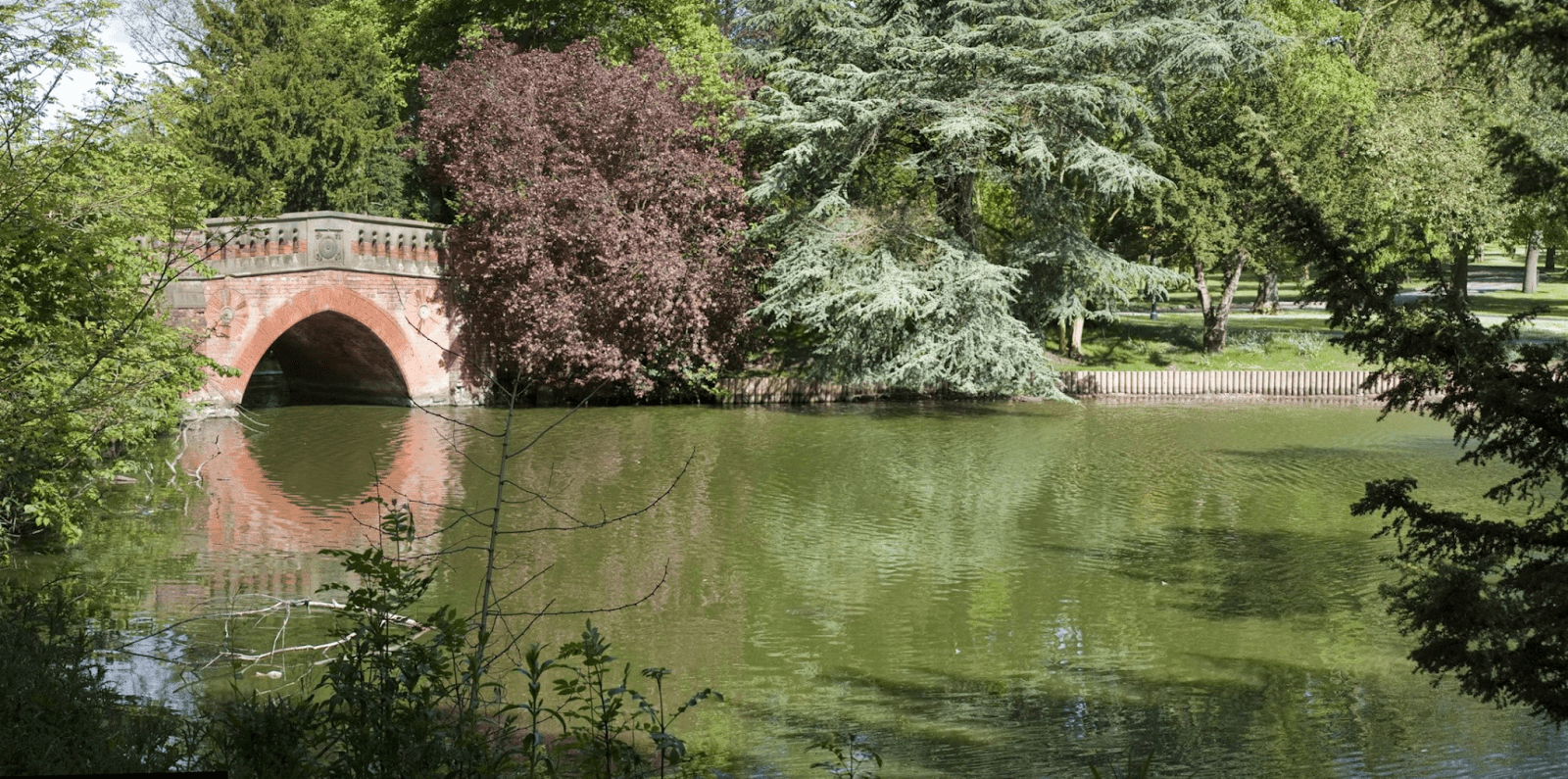
- Architectural highlights include the Red Carriage Bridge and the Bandstand, which have complemented the natural scenery for over a century.
Activities for Children and Adults
Cannon Hill Park features a variety of recreational spaces, including:
- Two playgrounds – One by the lake, featuring water attractions, and another near the car park with swings and a carousel. A children’s fairground operates on weekends.
- Mac Arts Centre – A cultural venue hosting theatre, dance, music, and comedy performances, as well as a cinema. During school holidays, the centre organises special activities for children.
- Fishing spots – Fishing is permitted along the riverbanks, lakes, and ponds within the park.
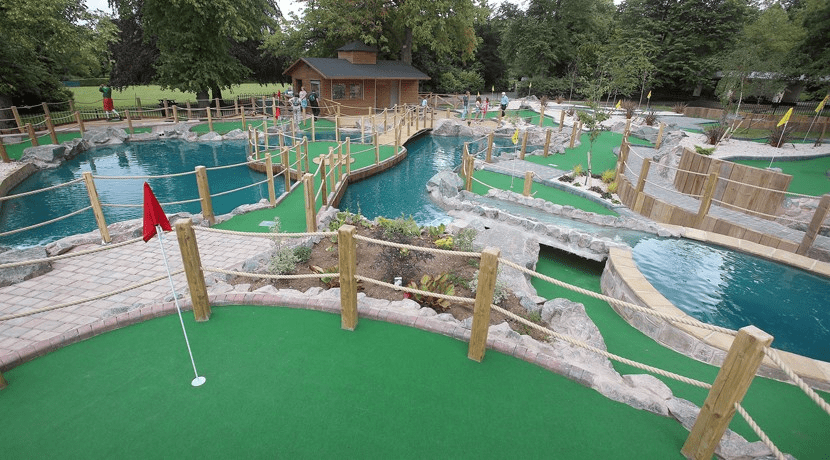
- Mini-golf course – A 36-hole mini-golf course for casual players and enthusiasts.
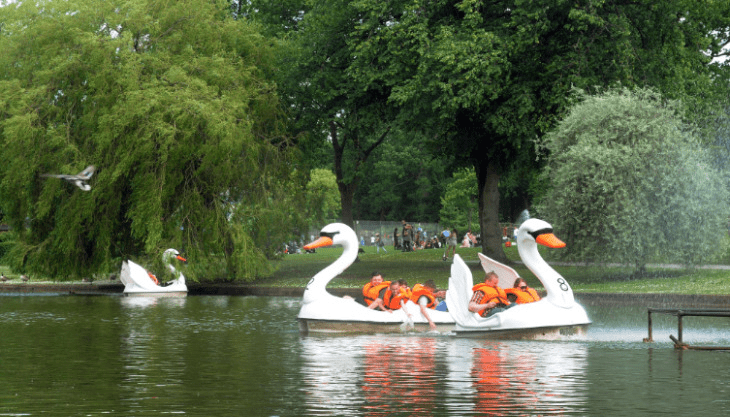
- Boat and sailing rentals – Various rental stations offer visitors the chance to explore the park’s waters by boat.
- Tennis courts – Available free of charge, though equipment rental and coaching sessions require payment.
Festivals and Sporting Events
Throughout its history, Cannon Hill Park has hosted numerous cultural and sporting events.
- Food festivals – A popular attraction where local farmers and restaurants showcase their culinary creations.
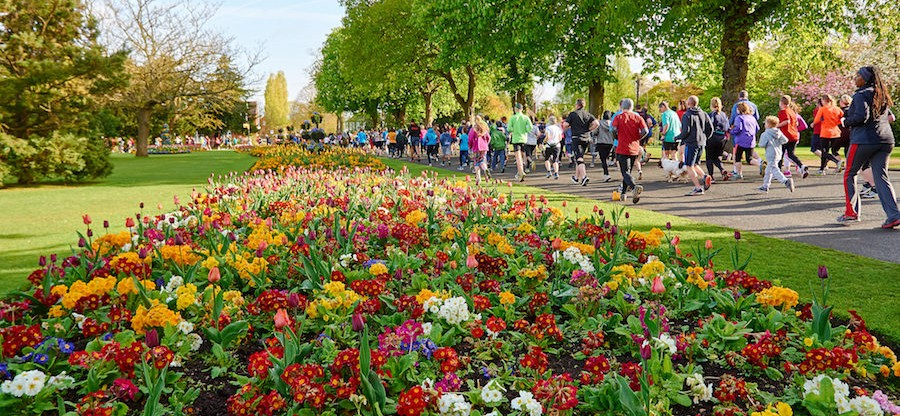
- Parkruns – A weekly tradition that began in the 21st century. Every Saturday at 9 AM, a group gathers to run or walk 5 km through the park, attracting over 750 participants weekly.
- Junior Parkruns – Held every Sunday for children aged 4 to 14, covering a 2 km route.
- Half-marathon routes – The park is part of the racecourse for major local half-marathons, including the Great Birmingham Run and Birmingham Half Marathon.
Cannon Hill Park remains an integral part of Birmingham’s cultural and architectural heritage. It offers a peaceful retreat from the city’s hustle and bustle, serving as a place where everyone can find something enjoyable and uplifting.