

Park · Birmingham · ⭐ 9.3/10 · 11558 reviews · updated: 2026-08-04 15:57:32
Address: Russell Rd, Moseley, Birmingham B13 8RD, United Kingdom
Cannon Hill Park — Birmingham’s Victorian green heart
Two hundred and fifty acres of lake, lawn and lime avenue lie a couple of miles south of Birmingham city centre, open to the public since September 1873. This is the city’s flagship Victorian park, and the density of what it holds is unusual: a boating lake, a major arts centre, a small conservation zoo, formal bedding, a Grade II* bandstand and a national memorial all share one network of paths. The River Rea runs along its flank, marking the boundary with Edgbaston Stadium. It works equally well for a ten-minute detour and for an unhurried day.
Highlights
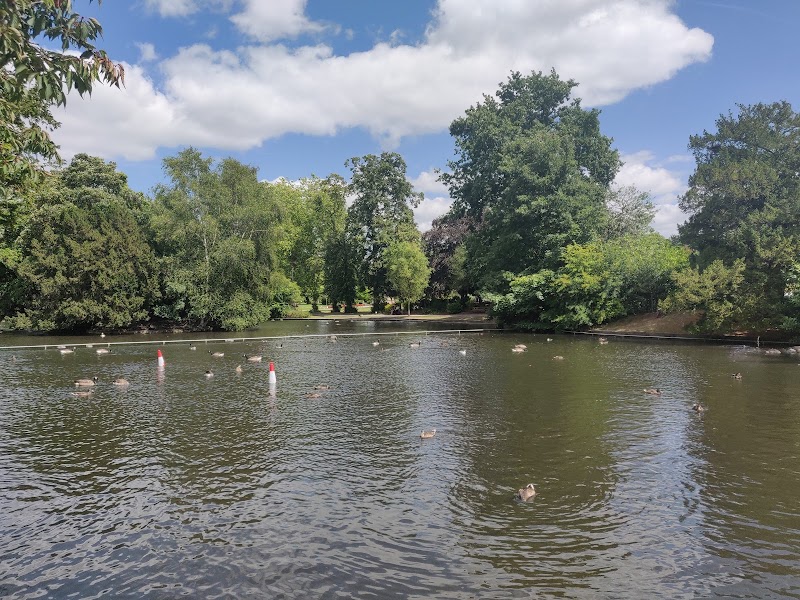
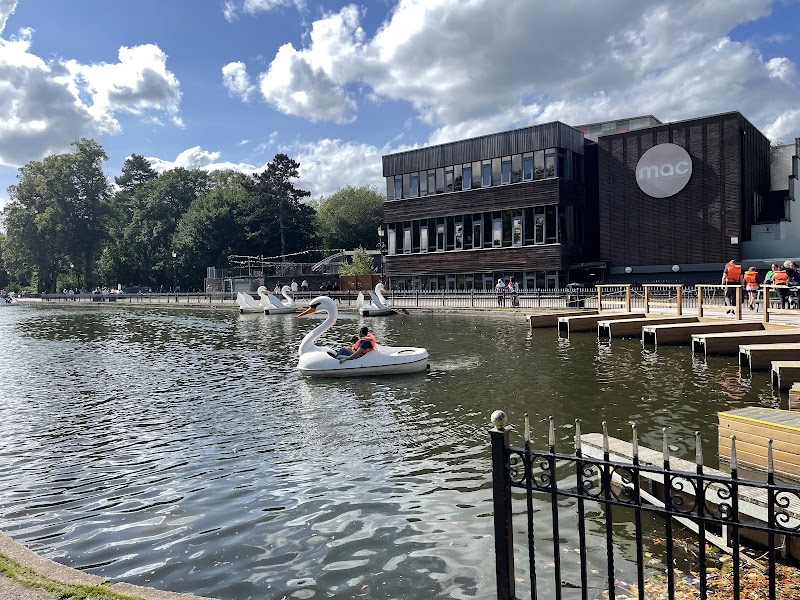
- The boating lake — the largest of the ornamental waters cut by J. T. Gibson of Battersea in the 1870s, when he shaped two big lakes, a chain of ponds and a bathing pool out of wet ground along the River Rea; pedalos work it in season, and swans, coots and great crested grebes hold the rest.
- MAC (Midlands Arts Centre) — founded in 1962 as the Midlands Arts Centre for Young People by the director John English, his wife Mollie Randle and the councillor Frank Price, built on the site of the park’s old lido, its foundation stone laid on 19 June 1962. Closed in April 2008 and reopened on 1 May 2010 after a £14.8 million rebuild, it now runs four performance spaces, a cinema, studios and free galleries, and recorded over a million visits in a single year.
- Birmingham Wildlife Conservation Park — 6.5 acres across the River Rea, holding red pandas, lemurs, tamarins, otters, meerkats, lynx, capybara and reptiles, a member of BIAZA and EAZA and a participant in European endangered species breeding programmes. It opened as Birmingham Zoo on 1 May 1964, closed in 1973, returned in 1974 as Birmingham Nature Centre and took its present name in 2014.
- The Japanese garden and the Elan Valley model — built in 1962 near MAC, a scale rendering of the Welsh reservoirs that pipe Birmingham’s drinking water, laid out as a descending chain of ornamental pools rather than a display board.
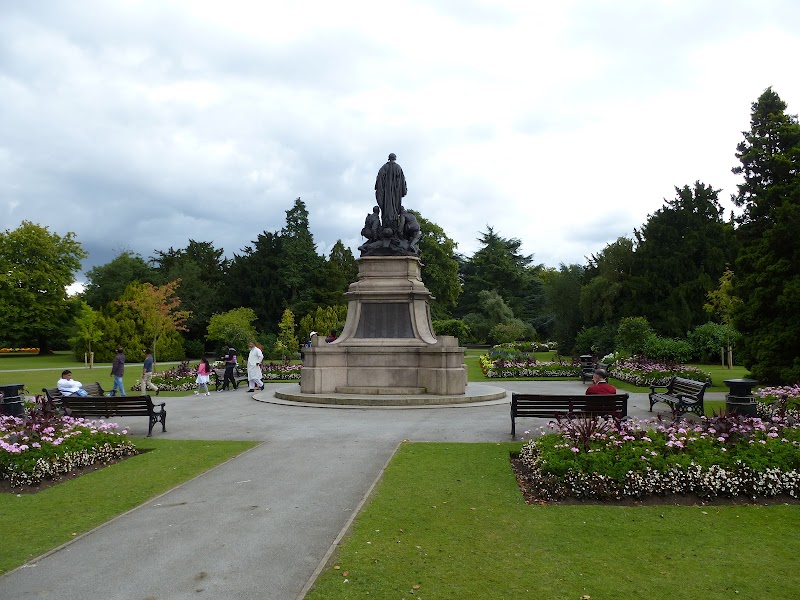
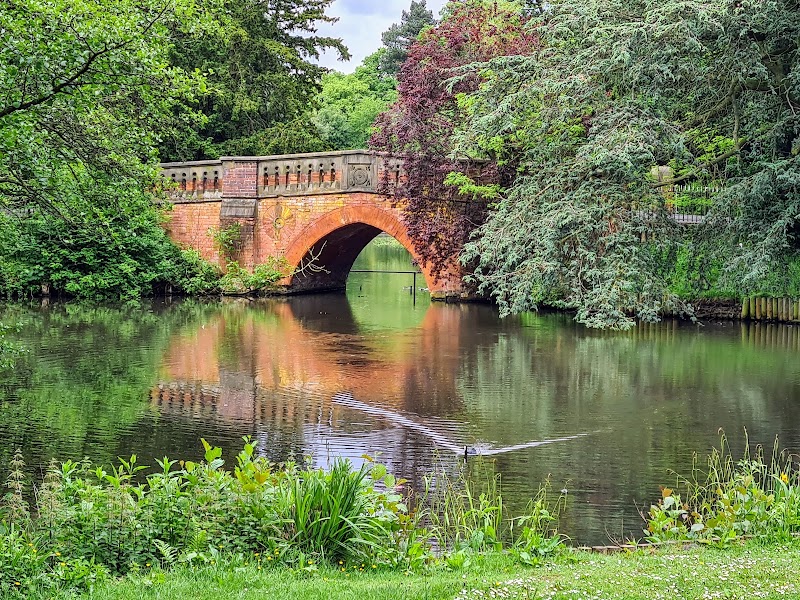
- The bandstand and the Boer War memorial — the bandstand and Albert Toft’s 1906 bronze are both listed Grade II*, the tier immediately below the highest, and the red carriage bridge over the water is listed too.
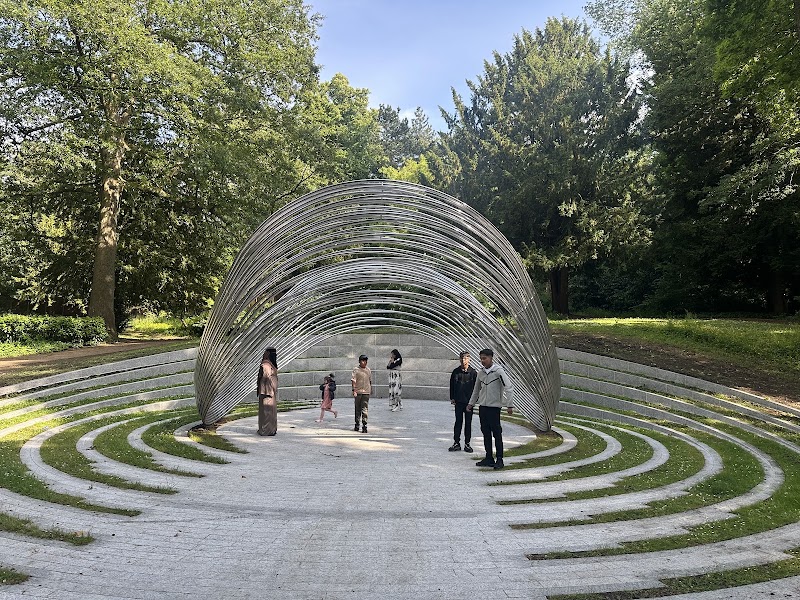
- Infinite Wave — the national memorial to the 31 British people killed in the 2015 Sousse and Bardo attacks in Tunisia, designed by George King Architects as a single wave woven from 31 separate threads, with ripples for the survivors and families; unveiled on 4 March 2019 by the Duke of Sussex.
What you’ll find
The park runs through four distinct moods, and the walk between any two of them is measured in minutes rather than effort.
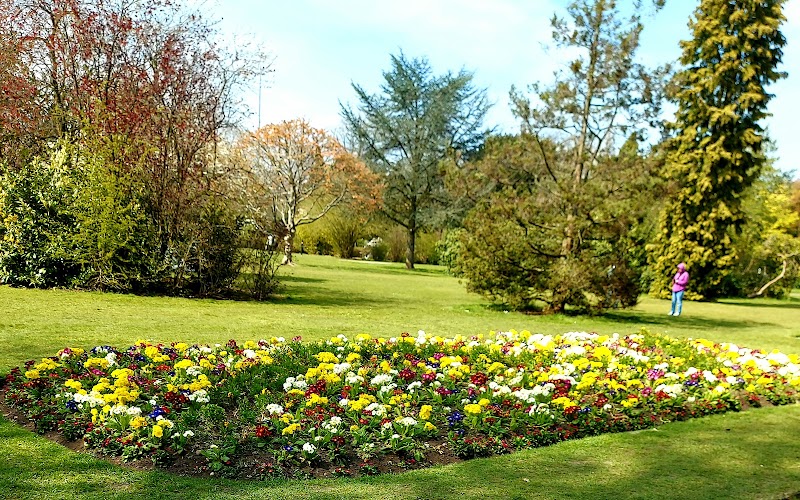
- The formal Victorian core — seasonal bedding, clipped lawns and broad avenues laid out for promenading, maintained with help from the Friends of Cannon Hill Park volunteer group.
- Water — a chain of lakes and ornamental ponds fed by the River Rea, whose course was straightened in 1898 after the park bought five acres specifically for the job.
- Woodland and conservation ground — including the five-acre RSPB Centenary Plantation and the deliberately rough, unmanicured margins along the river, which are where the park’s wildlife actually lives.
- Sport and play — tennis courts, a bowling green, a putting course, mini-golf, fishing swims and a large playground with rides aimed at toddlers up to around ten.
- Buildings with backstories — Cannon Hill House, and the timber-framed Golden Lion Inn, a sixteenth-century survivor moved here from Deritend in 1911 to save it from demolition; it sits on Historic England’s Heritage at Risk register, and the Birmingham Conservation Trust has secured a £345,000 Heritage at Risk grant to make it structurally sound and watertight.
- Recognition — the park regained a Green Flag Award in 2026, its first since 2022, under the Keep Britain Tidy scheme that benchmarks well-managed green space across the UK.
Things to do — and who it’s for
- Families with small children — the playground, the pedalos and the Wildlife Conservation Park sit within a few minutes of one another, so a visit can be rebuilt on the spot when the weather or the mood turns.
- Runners — a free 5km parkrun starts at 9am every Saturday and regularly draws several hundred, with a 2km junior event for ages four to fourteen on Sunday mornings; the Great Birmingham Run and the city 10k both route through the park.
- Culture-first visitors — MAC’s free galleries, cinema, studios and cafe make the park a genuine destination in rain as much as in sun, and its stages have carried everyone from early UB40 and Ocean Colour Scene to the young Adrian Lester.
- Cricket followers — Edgbaston Stadium, home of Warwickshire, stands immediately across the river, and the park is the obvious place to walk off a long day in the stands.
- Photographers and gardeners — formal bedding, the Japanese garden and the lakeside willows offer three quite different subjects inside a single circuit.
- Anyone with an hour — a full loop of the lakes and gardens is comfortable in 45 to 60 minutes on level, mostly surfaced paths that take a pushchair or a wheelchair without drama.
Getting there & practical
The park lies in Edgbaston, on the border with Moseley and Balsall Heath, roughly two miles south of the city centre. City buses 45 and 47 pass the main entrances, and routes 1, 35, 61, 62 and 63 stop within a short walk. By rail, Five Ways is the nearest station at about twenty minutes on foot, while Moseley Village — one of three Camp Hill line stations that opened to passengers in April 2026, reconnecting south Birmingham to the network after eighty years — is the newer option. Entry to the park is free and it is open daily; pedestrian gates keep long hours while vehicle entrances and car parks close earlier, so check before leaving a car. MAC is free to walk into and its galleries are free, with cinema screenings and theatre performances ticketed separately. Birmingham Wildlife Conservation Park is a separate attraction run by the city council, with its own admission and its own shorter, seasonal opening times. Allow an hour for a walk, or half a day if you add MAC and the animals.
When to visit
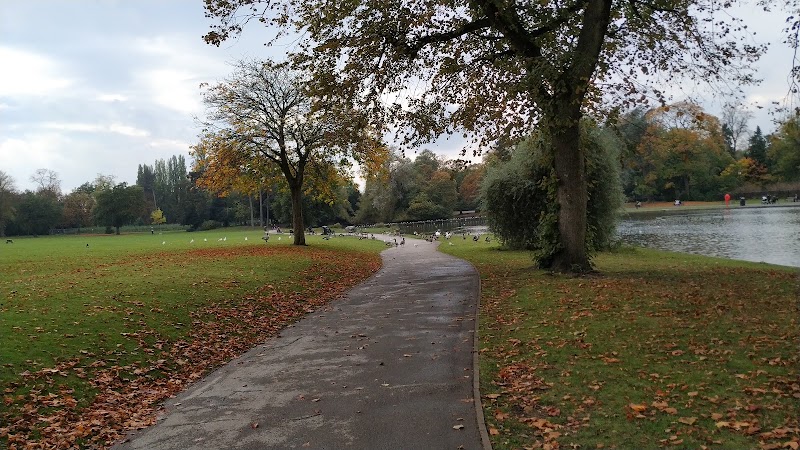
Spring is the park at its most photographed: bulbs and blossom through the formal beds, the lime avenues in first leaf, the lakes noisy with nesting waterfowl and grebes running their courtship on open water. Summer brings the pedalos, open-air events and MAC’s fullest programme, along with the heaviest crowds on hot weekends — an early start is the only cure, and the shade of the older avenues is worth walking to. Autumn is arguably the best of the four, when the avenues and the riverside plantation turn and low light comes in flat across the water; it is also the quietest time for the conservation margins, with fungi under the trees. Winter strips the place back to its bones — bandstand, carriage bridge, bare limes, mist standing on the lake — and hands it back to local walkers, with the cafe and MAC doing the work the weather refuses.
Good to know
The park exists because of one benefactor. Louisa Anne Ryland (1814–1889), heiress to a large Birmingham estate and a famously private philanthropist, gave the town more than 57 acres on 18 April 1873 on condition that the ground be laid out for public use; it opened that September. J. T. Gibson did the design, cutting the lakes, ponds and bathing pool from low, wet land along the Rea. Ryland went on to give the land for Small Heath Park as well, and declined to have either park named after her. The ground then grew: the brewer John Holder added seven acres in 1897 to mark Queen Victoria’s Diamond Jubilee, and five more were bought in 1898 to straighten the river. The twentieth century layered culture over the Victorian landscape — a Scout memorial unveiled on 27 July 1924, MAC in 1962, the Japanese garden the same year, then the zoo that opened in 1964, vanished in 1973 and came back in 1974 as a nature centre. One of its residents, a red panda called Babu, escaped twice in four days in 2005 and set off a citywide search that made the national news.
Visitor tips
- Arrive before 10am on a summer Saturday. Once parkrun finishes the paths clear quickly, and the lake is at its stillest for photographs.
- Treat MAC as the wet-weather plan rather than a separate outing: the galleries and cafe are free, and it stands inside the park itself, a few minutes from the boating lake.
- Check the Wildlife Conservation Park’s own opening times before building a day around it — they are shorter than the park’s, and they shift with the season.
Questions & answers
Is Cannon Hill Park free? Yes — the park and its gardens are free to enter, as are MAC’s galleries. Boating, mini-golf and the Wildlife Conservation Park are paid for separately.
How big is it? About 250 acres, roughly 101 hectares, taking in formal gardens, woodland, conservation ground and sports areas.
Who gave the land? Louisa Anne Ryland, in April 1873. Her original gift was over 57 acres; additions in 1897 and 1898 brought the park close to its present extent, and it opened to the public in September 1873.
Can I see animals there? Yes, at Birmingham Wildlife Conservation Park on the park’s edge — red pandas, lemurs, otters, meerkats, lynx and reptiles among them. It is a separate ticketed attraction with its own hours.
What is MAC and do I need a ticket? MAC is the Midlands Arts Centre, founded in 1962 and rebuilt for £14.8 million by 2010. Walking in, using the cafe and seeing the galleries cost nothing; cinema and theatre are ticketed.
Is it good for young children? Very. Flat surfaced paths, a large playground, pedalos in season and the animals all sit within a short walk of each other.
What’s the nearest station? Five Ways, about twenty minutes on foot; Moseley Village on the Camp Hill line is the newer alternative, and buses 45 and 47 stop closest of all.
Photos
Show 1 more photos
Visitor reviews
Reviews last updated: 2026-08-04 15:57:32
Data is refreshed monthly. Sources: birminghamname.com and editorial picks based on reviews.
I visited the park with my family on a bank holiday. It was sunny (hot — over 30 degrees), and so it was busy.
Cannon Hill Park is one of those rare city parks that genuinely lives up to expectations. It's 250 acres of…
We recently visited Birmingham Wildlife Park in Cannon Hill Park and had a wonderful day. The entry price was decent and fair for what you get. It took us about an hour to walk round properly, but you could easily spend…
We came here earlier, on a lovely sunny day (a rarity for March, lol). We took a long, relaxing walk through the park and enjoyed every bit of it. We sat on a bench by one of the lakes and enjoyed the fresh air, the peac…
Cannon Hill Park is basically Brum's back garden on a sunny weekend, and you can feel its energy the moment you walk in — swan boats bobbing on the lake, kids running around the playground and about fifty different footb…