

Founded in Birmingham by Rob Linton and Daniel Long in 2012, with only £500, Clearabee quickly grew from a company with only one lorry to the UK’s largest on-demand waste collection company. It is now known for its fast paperwork processing using a ‘man-and-van’ formula and a strong focus on sustainability.
Here, over 95% of waste is recycled, offsetting carbon emissions and consistently appearing on lists of fast-growing companies. This allows it to expand to hundreds of employees and a fleet of vehicles across the country, focusing on efficient, technology-driven operations and customer service. But Clearabee’s main task, as the company sees it, is to preserve and care for the environment of Birmingham and the whole country. You can read more about all this at birminghamname.com.
History of creation
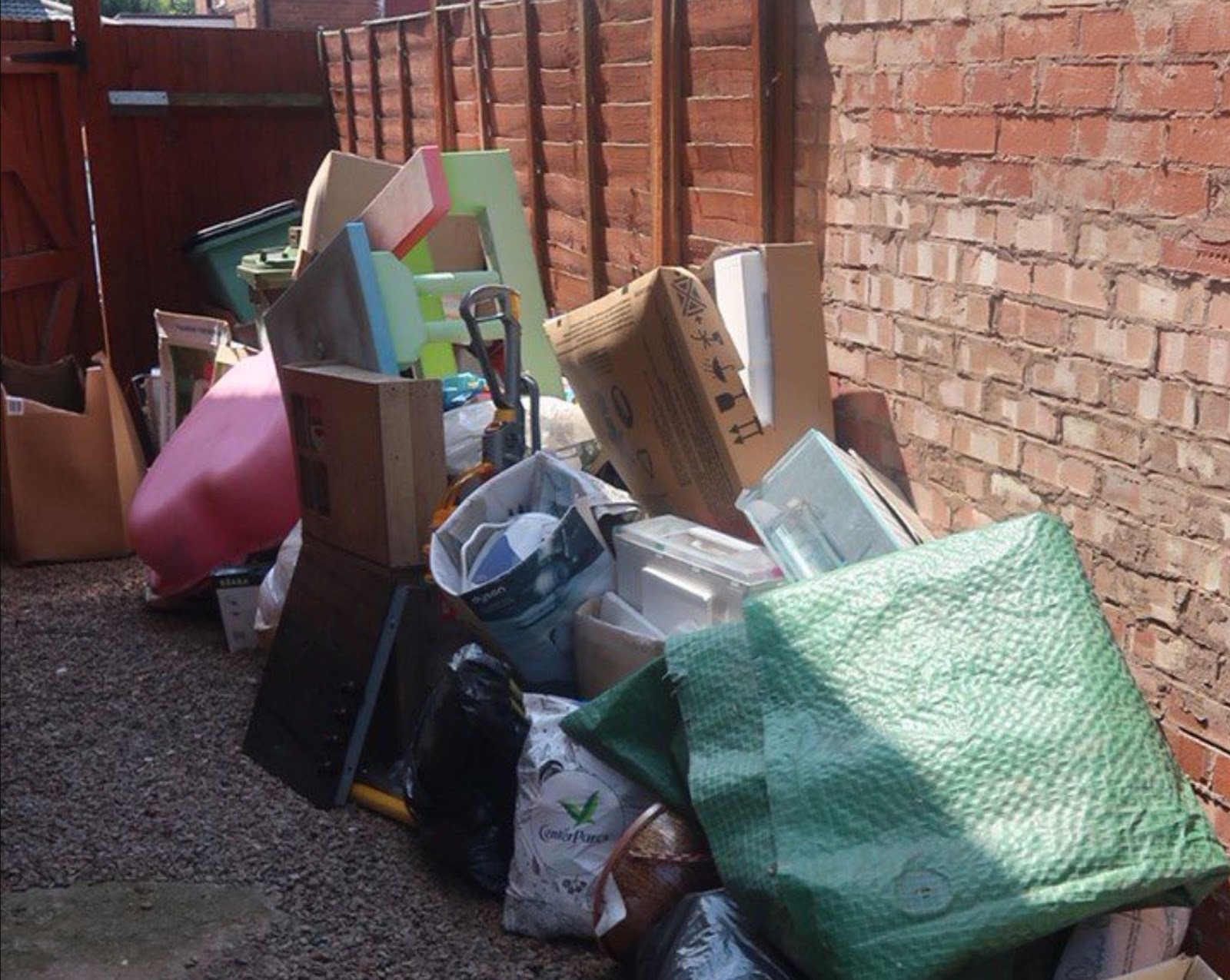
On one of Birmingham’s industrial streets, where waste used to accumulate and abandoned hangars from the era of industrial production stood, is now home to one of the most unexpected symbols of British environmental innovation. Clearabee is not a multinational corporation, as one might think, born in the respectable offices of London’s glass skyscrapers.
This enterprise, which appeared in the heart of the West Midlands, did not arise from someone’s whim. It was born to meet a specific need that arose among the people of Birmingham, namely, the need to deal with what has always been produced in excess in human society: waste.
The history of Clearabee began in 2012. Thanks to two entrepreneurs, Daniel Long and Rob Linton, and the one lorry they owned, local residents were able to receive a reliable, fast and transparent service for the removal of bulky waste. The focus was on large waste items: unwanted household items, old furniture, etc.
It seemed that there was nothing original here, but behind this simplicity lay a certain vision, namely, a vision of an ideal future, which the company had been striving for since its inception. In a country where a significant portion of waste still ended up in landfills, Clearabee’s owners realised that the real economic and, more importantly, environmental potential lay not in disposal, but in recycling.
Within a few years, Clearabee had transformed itself from a small local bulky waste collection service into a major national player. Its headquarters remained in Birmingham, a city that is not only a symbol of the industrial revolution, but also a laboratory for environmental transformation.
This continuity is no accident: Birmingham, once a centre for coal, steel and mass manufacturing, is gradually transforming itself into a city where people are taught to repair, recycle and reinvent.
The basis of our activities
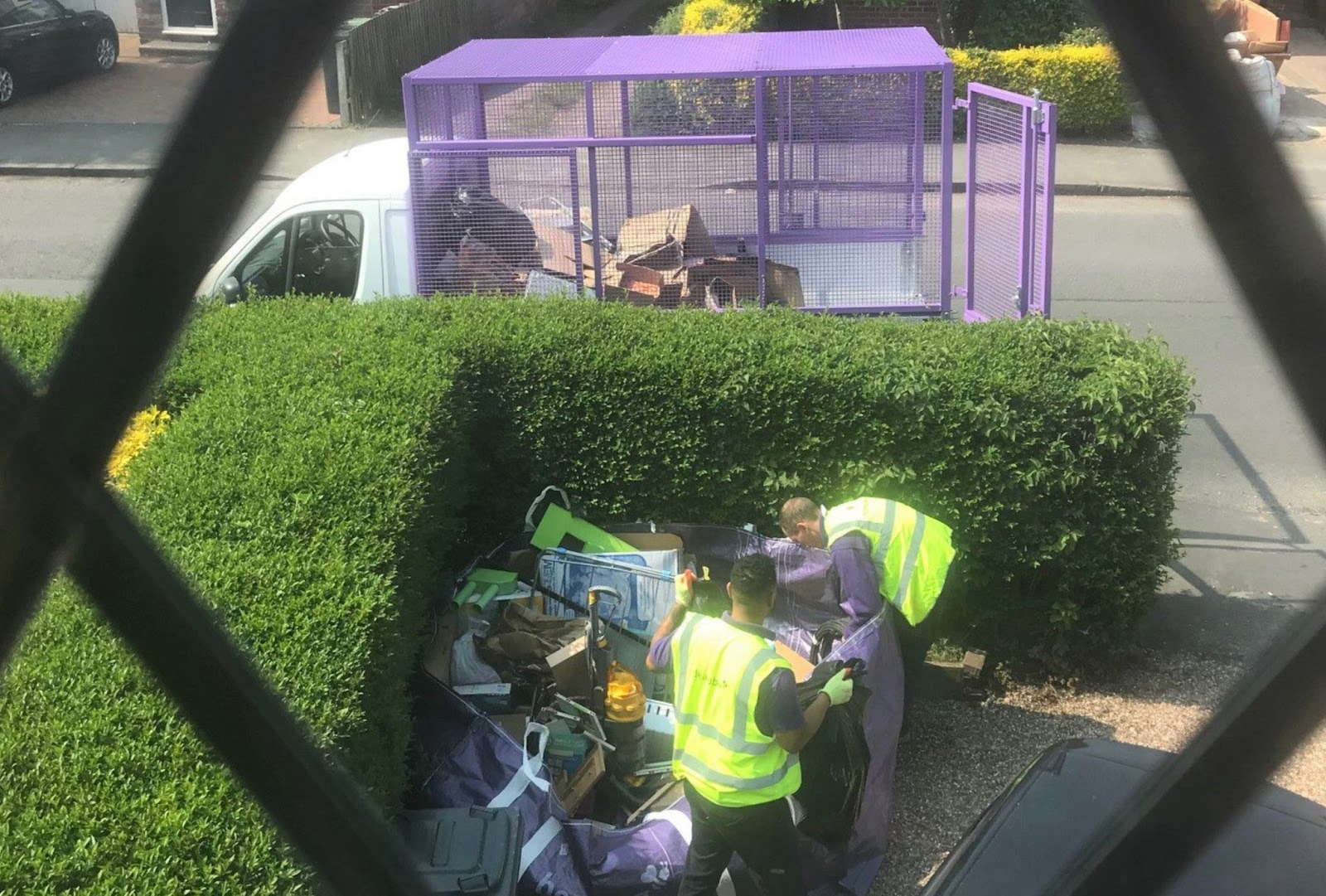
Clearabee’s business is based on the key idea that every discarded item still has some value. Sofas, mattresses, wood, electrical appliances, metals — the items that the company’s employees have to transport in their trucks are not considered rubbish, waste, or a burden to be disposed of as quickly as possible, but rather a resource.
In Birmingham, the company operates a state-of-the-art sorting and recycling centre capable of dismantling, sorting and recycling thousands of tonnes of various materials every year. What can be recycled is recycled. What cannot be recycled is converted into solid recovered fuel, which is used, in particular, in industry. All this instead of burying this resource in the ground.
The result is impressive: just think, over 95% of the waste collected by Clearabee does not end up in landfill. In an industry that has long been associated with pollution and inefficiency, this is a figure that turns the situation upside down. After all, it means less polluted soil, fewer trucks travelling hundreds of kilometres to disposal sites, and, as a result, fewer greenhouse gases emitted into the atmosphere.
But Clearabee did not stop at waste management. In 2018, the company made a serious commitment to become carbon-neutral. To achieve this, they first reduced their own emissions by optimising their vehicle routes, modernising their fleet and using monitoring technology to improve driving.
Then the company launched the Clareabee Forest project. This is a reforestation programme not only in Birmingham but throughout the United Kingdom. Tens of thousands of trees have already been planted, forming new forests capable of absorbing the carbon dioxide produced by the company’s activities. This choice is symbolic, because a company that recycles waste and plants forests is not just a PR stunt, but a way to close the loop. Where resources are consumed, new ones are created. Where carbon is emitted, nature mobilises to absorb it.
The company’s impact on the local community

In Birmingham, Clareabee’s impact on the local community can be considered significant. The Clearabee waste recycling centre creates local jobs in a promising industry — the circular economy. This is a model of production and consumption that contrasts with the traditional linear model, and quite successfully, with the aim of minimising waste and maximising the use of resources through reuse, repair, recycling, and recovery.
In this way, materials and products are kept in circulation for as long as possible, mimicking natural cycles. Similarly, Clareabee’s activities in Birmingham reduce the burden on municipal waste management infrastructure and contribute to improving air and soil quality by limiting the use of landfills and long-distance waste transport.
Looking at the company’s activities in a broader sense, it can be said that Clearabee is writing a new chapter in the history of the British economy. It is the story of a country that, having built its wealth on extraction and mass production, is now learning to live within the planet’s limits. In addition, the company clearly demonstrates that ecology is not only not the enemy of business, but on the contrary, can be its driving force. After all, by turning waste into raw materials, it transforms an environmental problem into an economic opportunity.
The ecological revolution
In a city like Birmingham, which has long been synonymous with England’s industrial face, Clearabee is more than just a waste management company. It is a vivid symbol that the time for change has come. In its day, the Industrial Revolution, which had its cradle in Birmingham, had its unchanging attributes — tall chimneys and factories.
Today’s realities are pushing humanity towards an ecological revolution, which has already begun. Its attributes are sorting centres, smart fleets and regenerated forests. And in the midst of this transition is a company that started with a single truck. It shows that another model is possible, and in this model, economic prosperity and respect for the planet finally move in the same direction.
Sources: