

Park · Birmingham · ⭐ 9.1/10 · 1394 reviews · updated: 2026-08-04 15:57:39
Address: Perry Ave, Perry Barr, Birmingham B42 1RS, United Kingdom
Perry Hall Park — the Tame valley floodplain and the cricket capital of north Birmingham
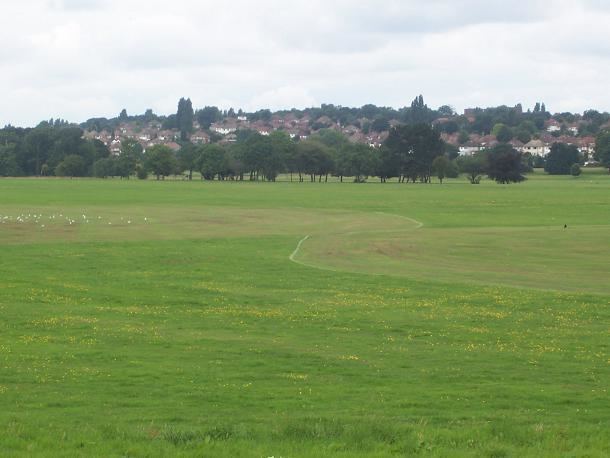
Perry Hall Park is one of Birmingham’s great flat green plains: a broad floodplain landscape in Perry Barr where the River Tame runs straight through the middle and the horizon fills with pitch after pitch. It is the working park of the northern city — a place for cricket, for a Saturday morning 5k, for cycle speedway and for long uncomplicated dog walks — and it doubles, by deliberate engineering, as a giant flood store protecting the neighbourhoods downstream. Behind all the sport lies an older story: this was the parkland of an Elizabethan mansion whose moat is still here, even though the house itself has been gone for a century.
Highlights
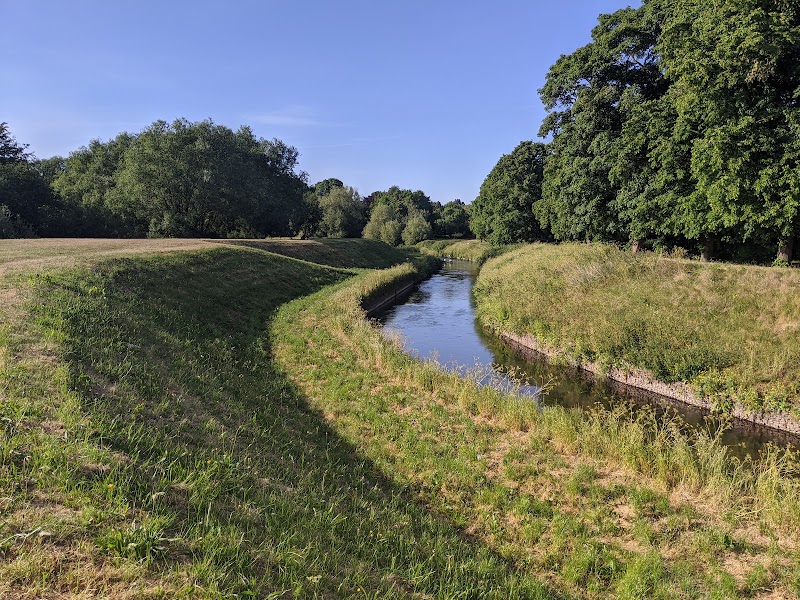
- The River Tame — bisects the park from north-west to south-east. Straightened around 1970 by the Severn Trent Water Authority, it was remodelled again in 2005 to slow its flow and rebuild wildlife habitat.
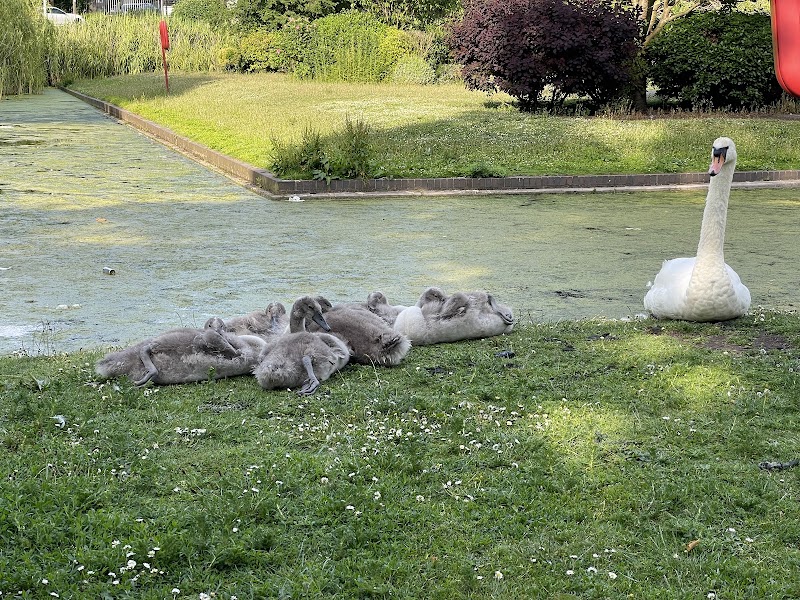
- The moated garden — a rectangular, brick-lined moat fed by a small stream running into the Tame. It marks the site of the medieval moat of Perry Hall, reworked in the 1930s as a garden feature, and is the only visible trace of the vanished mansion.
- Fifteen cricket pitches — the home ground of the Birmingham Parks Cricket League and an extraordinary concentration of squares on a single site, filling the south-western half of the park through the summer.
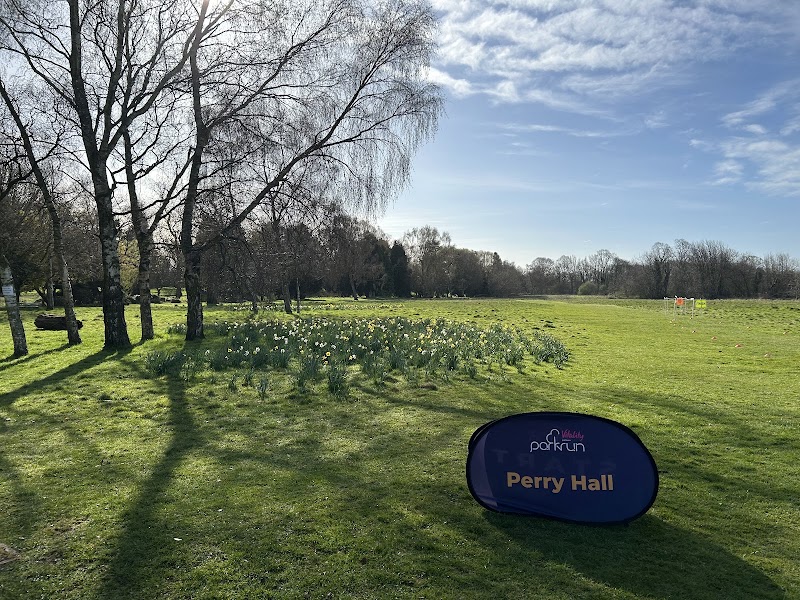
- Perry Hall parkrun — a free timed 5k held every Saturday morning at nine over a mixture of tarmac paths, gravel paths and grass; the course was moved off the open field and onto the path network in 2016.
- The cycle speedway track — home of the Birmingham Monarchs, who race in the Midland League on bikes with no gears and no brakes, and hold open training sessions on Tuesday evenings from March to October.
- The flood storage landscape — a detention reservoir of some 184,000 cubic metres. In high water the river spills over a bund onto the lowered parkland and is held there until it can be released safely.
What you’ll find
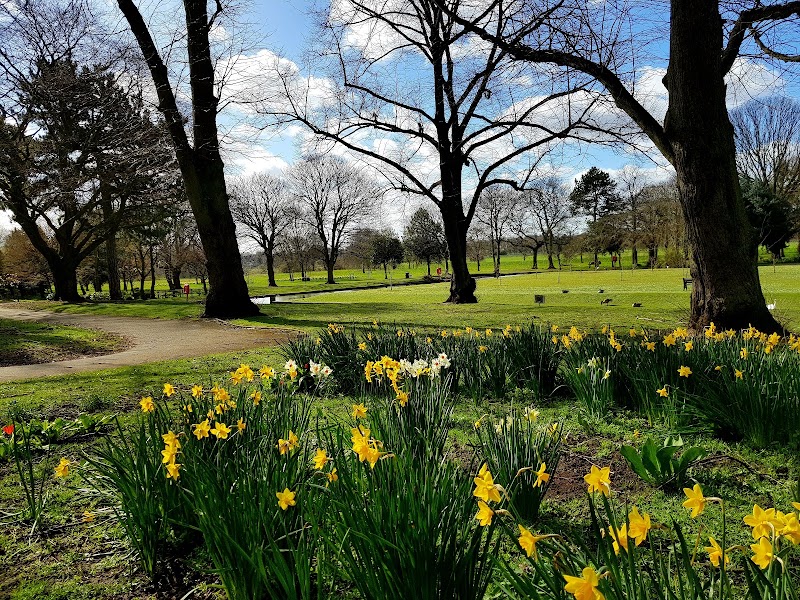
This is a park of scale rather than ornament. Expect wide skies, mown sports grass, riverside scrub and a path network that lets you build a route of almost any length. The two halves have distinct characters: the cricket ground south-west of the river is formal and busy, while the north-eastern side feels more like open countryside.
- Football pitches alongside the cricket squares, in near-continuous weekend use through the season.
- A picnic area and open meadow ground on the lower, flood-shaped terraces.
- Walking and cycling routes following the Tame corridor across the whole width of the park.
- Rough grassland, backwaters and wet margins created by the river works, which draw herons, wagtails and wintering birds.
- Long straight paths favoured by runners and by anyone training for distance.
- Car parking on site and gates giving onto several surrounding neighbourhoods.
Things to do — and who it’s for
- Runners — the weekly 5k and the flat, forgiving surfaces make this one of north Birmingham’s best training grounds, in a park that has grown its own running community.
- Cricketers and footballers — league fixtures fill the pitches from spring through to autumn, and spectating costs nothing.
- Cycle speedway riders — the Monarchs run come-and-try sessions, one of very few places in the city where you can pick up the sport.
- Dog walkers — space enough for a long off-lead walk well away from traffic, with the river as a natural spine.
- Birdwatchers — the restored river margins are the most rewarding corner, particularly early in the day.
- Local history enthusiasts — the moat, and the packhorse bridge just beyond the park, tell the story of the Gough estate better than any plaque.
Getting there & practical
The park lies in Perry Barr in north-west Birmingham, on ground that belonged to Staffordshire until the district joined the city in 1928. Perry Barr and Hamstead stations both serve it within a short walk, and buses heading for Alexander Stadium stop close to the main entrance. There is parking on site. Entry is free — the site is additionally protected by a Fields in Trust Deed of Dedication, which safeguards it as public recreation land in perpetuity — and the parkland is unfenced and usable from dawn until dusk. Give it an hour for a river loop, two or three if you are watching sport or walking the full perimeter. Note that this is a different place from Perry Park, the neighbouring green space that contains Alexander Stadium.
When to visit
Spring is when the pitches come back to life, the cricket squares are rolled and the river margins green up fast. Summer is the park at full tilt: fixtures most weekends, long evenings, dry fast paths and the widest skies in this part of the city. Autumn quietens everything down and turns the riverside willows and poplars, and it is the best season for birds along the Tame, when passage migrants use the corridor. Winter shows the park’s engineering honestly — after heavy rain the lower ground floods on purpose, sheets of water standing across the pitches for days before draining away. It is a genuinely impressive sight, but it means keeping to the higher paths and checking conditions before you set out.
Good to know
The name Perry comes from the Old English for a pear tree and appears in the Domesday Book of 1086 as Pirio. Perry Hall itself was built in 1576 by Sir William Stanford and bought in 1669 by Sir Henry Gough of Wolverhampton, whose family fortune came from the wool trade; the Goughs held it until 1844, when Lord Calthorpe acquired the manor. The estate’s reach was long: when Harry Dorsey Gough established his Maryland plantation in 1774 he named it Perry Hall after this place, and the American name survives to this day. The Birmingham mansion was demolished in 1927, the grounds opened to the public in 1929, and the playing fields were laid out in the early 1930s. Just beyond the park, the red sandstone packhorse crossing known as Perry Bridge or the Zig-Zag Bridge — built after the Staffordshire Quarter Sessions ordered a replacement for a wooden horse bridge in 1709, and said to have been paid for by Sir Henry Gough — is both a listed building and a scheduled monument; a Roman road crossed the Tame at that same point. In 1913 the grounds hosted the Imperial Scout Exhibition, Rally and Sea Scout Display, drawing some 30,000 scouts from across the British Empire and beyond. The modern river landscape was shaped by two interventions: flood alleviation works in the 1980s that lowered the parkland south-west of the Tame, and the SMURF project — Sustainable Management of Urban Rivers and Floodplains — an EU-backed programme coordinated by the Environment Agency between 2002 and 2005 with a budget of around two million euros. SMURF used community focus groups to set the targets for restoring this stretch of river and has since been cited as a case study in public participation. Part of the park served as parking during the 2022 Commonwealth Games at the neighbouring stadium.
Visitor tips
- Do not confuse it with Perry Park nearby, which holds Alexander Stadium — they are two separate green spaces with two separate entrances.
- After prolonged rain, check conditions: the lower ground is designed to flood and paths there can genuinely be under water.
- Come on a Saturday morning for the park at its liveliest, when the parkrun and the cricket fixtures overlap.
Questions & answers
Is Perry Hall Park the same as Perry Park? No. Perry Park is the neighbouring site containing Alexander Stadium; Perry Hall Park is the larger river-and-pitches landscape beside it.
Is there an entry charge? No. It is free open public land, and a Fields in Trust Deed of Dedication protects it as public recreation space for the future.
Is there a parkrun here? Yes. Perry Hall parkrun covers 5k on a mix of tarmac, gravel and grass and starts on Saturday mornings at nine; the route was moved onto the path network in 2016 to spare the field.
Why does the park flood? By design. Flood alleviation works in the 1980s lowered part of the parkland so that excess river water can be stored on the pitches, with a detention capacity of around 184,000 cubic metres, then released slowly.
Can I still see anything of the old hall? Only the moated garden, which marks the site of the medieval moat. The mansion was pulled down in 1927.
Is it good for cycling? Yes — the riverside routes are flat and traffic-free, and the site includes a cycle speedway track where the Birmingham Monarchs train and race.
Photos
Show 1 more photos
Visitor reviews
Reviews last updated: 2026-08-04 15:57:39
Data is refreshed monthly. Sources: birminghamname.com and editorial picks based on reviews.
A spacious park for a family day out with plenty of room for walking, running and relaxing. The playground keeps the little ones entertained, and the open grassy spaces are perfect for a picnic. A simple, cosy place for…
My goto place for peaceful walks. Always clean with neatly cut grass.
This park is simply beautiful in every way.
Acres of open space. On a nice day it's wonderful just to stroll and enjoy the fresh air.
There are plenty of free parking spaces, but they can fill up fairly quickly.
The s…
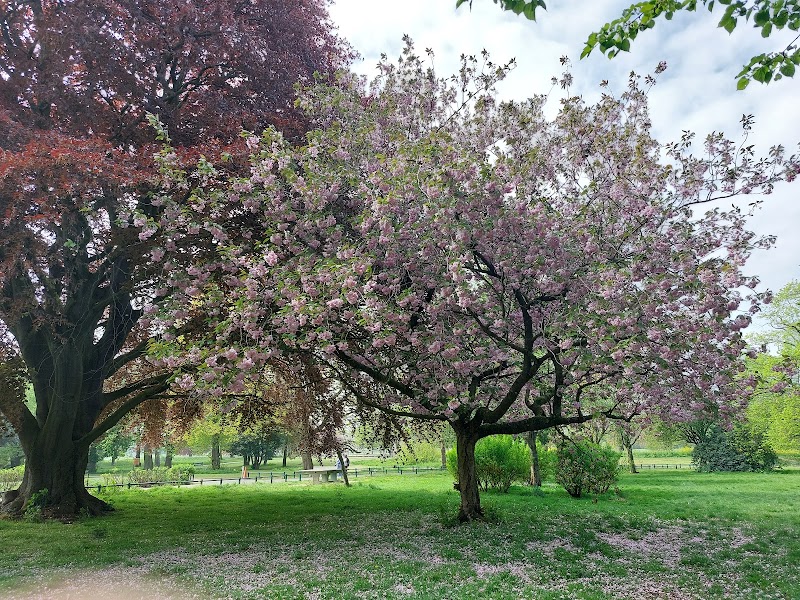
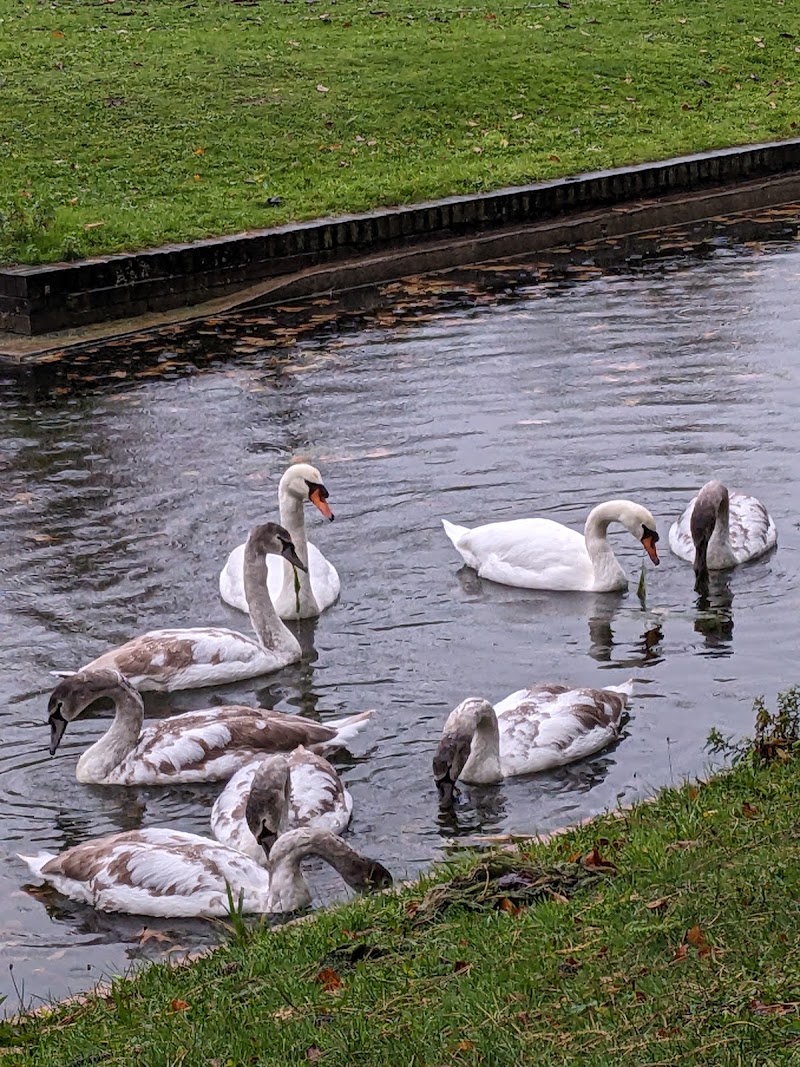
This is my favourite park in Birmingham. Lovely landscaping, with a river and a pond running through it. Quality paths and wonderful trees, especially in autumn (see photo). As a bonus, there's also a decent outdoor gym.…
A fantastic park for all visitors. It has toilets (available only on certain days when park staff are on duty), and it's accessible for people with disabilities. The car parks by the building with the toilet and informat…