

Park · Birmingham · ⭐ 9.3/10 · 1362 reviews · updated: 2026-08-04 15:57:39
Address: Shutlock Ln, Birmingham B13 8QG, United Kingdom
Highbury Park — Joseph Chamberlain’s countryside estate, left to the city
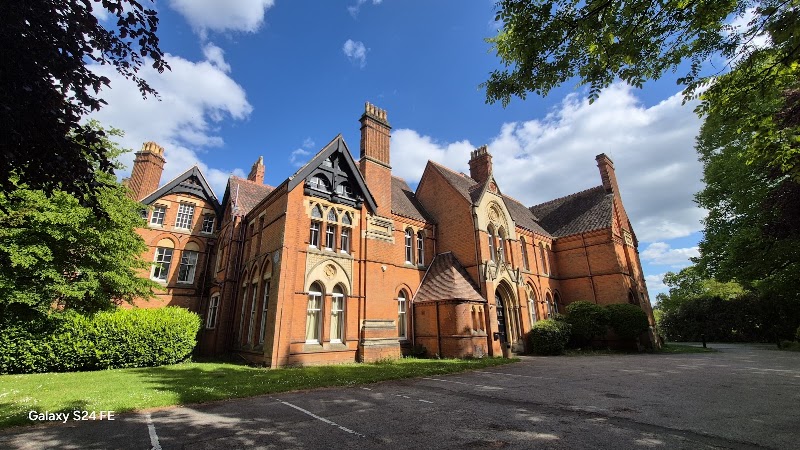
Highbury Park does not look designed, and that is precisely the point. Rolling meadow, ancient hedgerow, half-wild woodland, marshy hollows and a scatter of ponds run down the slope between Moseley and Kings Heath, with the Victorian bulk of Highbury Hall standing on the northern edge. This was Joseph Chamberlain’s private version of countryside inside the city — a working landscape of hay meadows and orchards dressed with Italian and Dutch gardens — and he left it to the people of Birmingham. What survives today is one of the least manicured and most biologically interesting large parks in the south of the city, with a community orchard growing in the middle of it.
Highlights
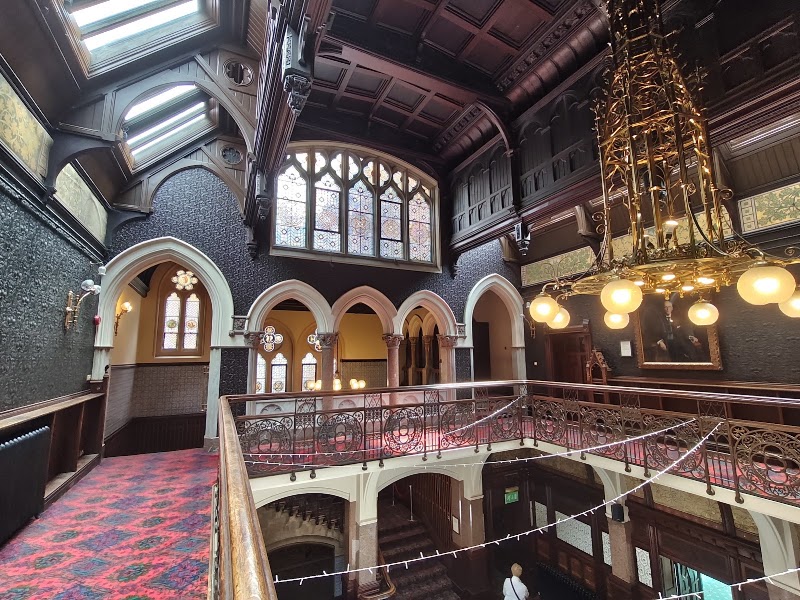
- Highbury Hall — designed in 1878 by the architect John Henry Chamberlain (no relation) for Joseph Chamberlain, and the family home from 1880 until his death in 1914. The hall and its grounds are on the national Register of Parks and Gardens at Grade II, and the building currently sits on the Heritage at Risk Register.
- Highbury Community Orchard — a one-acre permaculture forest garden worked by volunteers since 2010 and constituted as a community interest company in 2012, growing heritage and modern apples, pears, plums and quinces alongside redcurrants, gooseberries, blackberries and tayberries, with a wildlife pond and resident bees.
- The Henburys pond — the south-western pool, named for a vanished house and estate, where kingfishers hunt sticklebacks.
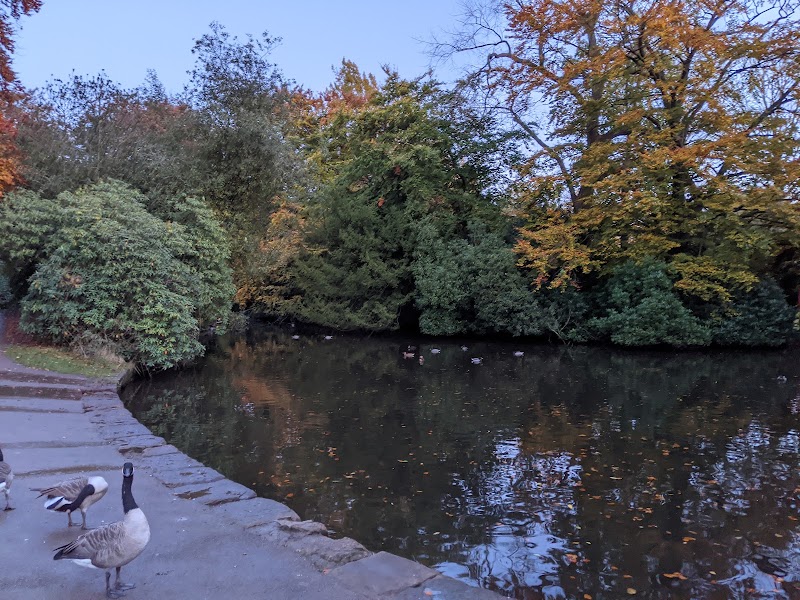
- Long Pond — ringed with beech, ash and oak, its shallows carrying mosses and water starwort; foxes are regularly seen along its banks.
- The hay meadows — upper and lower meadows restored to flowering grassland, now among the richest habitat on the site.
- Ancient hedgerows and ridge and furrow — hawthorn hedges studded with mature oaks, and medieval plough ridges still readable in ten separate places across the park.
What you’ll find
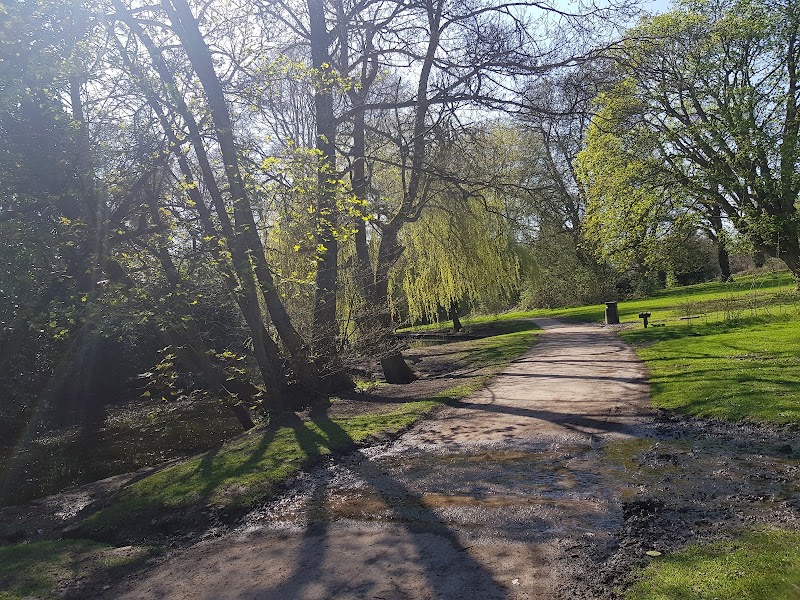
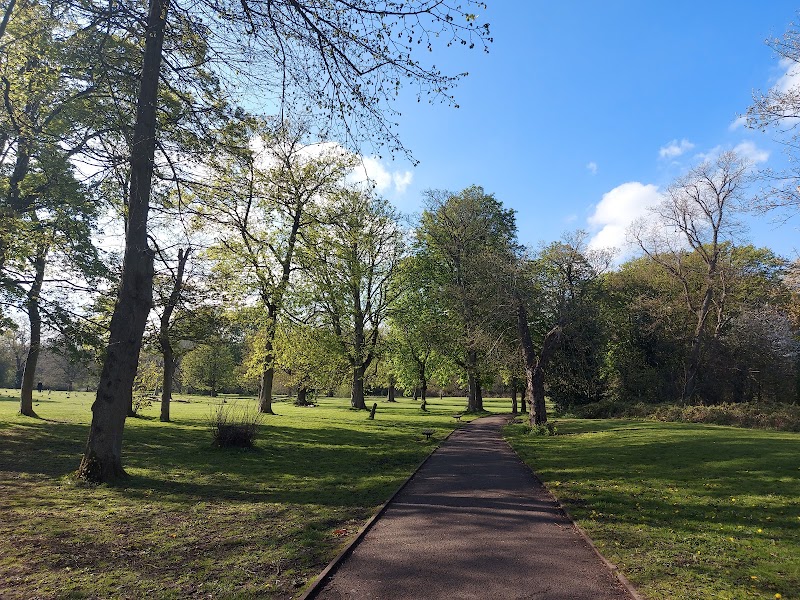
The character shifts every hundred metres: formal edges near the hall, then meadow, scrub, wet hollows, streams and pockets of old woodland whose spring flora — bluebell, pignut and dog’s mercury — marks it as long established. New surfaced woodland paths installed in 2021 opened up a great deal more of the park to people who cannot manage rough ground.
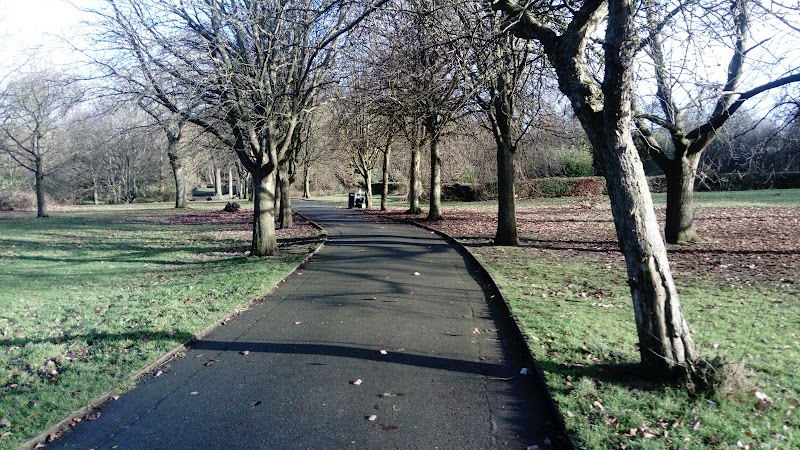
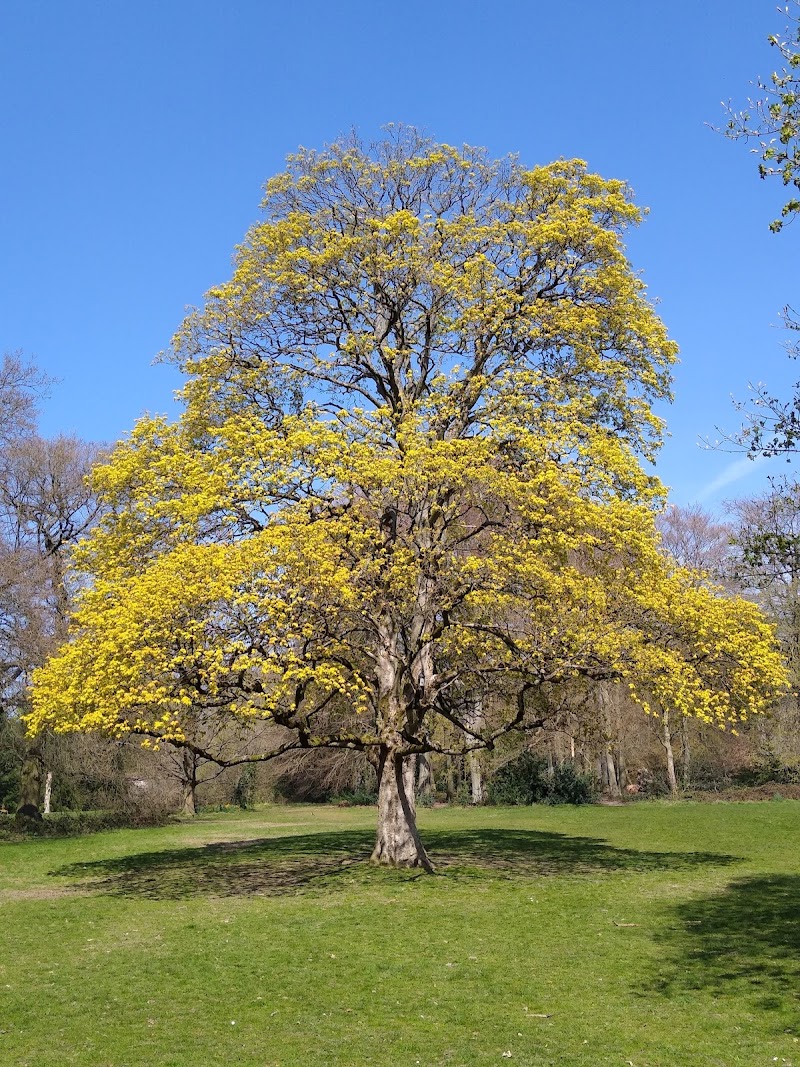
- A lime avenue and specimen trees surviving from the Victorian estate planting.
- Oak Tree Pond, now largely dried out but still holding yellow flag and other wetland plants.
- Streams, marshland and the long fish pond threading the valley bottom.
- Picnic ground and open grass on the upper slopes, with views back towards the hall.
- Orchard features made for children — raised beds, a herb spiral, climbing logs, a mud kitchen and a dogwood den.
- A car park on the eastern side and several pedestrian entrances from the surrounding suburbs.
Things to do — and who it’s for
- Nature watchers — a 2022 local sites assessment by the Birmingham and Black Country Wildlife Trust put the whole park and estate forward as candidates for nature conservation designation.
- Birdwatchers — kingfisher, treecreeper, jay and nuthatch have all been recorded here, and a local enthusiast has published an illustrated e-book of the park’s birds.
- Families — the orchard’s play features and the open meadows suit small children better than any formal playground.
- Dog walkers — a genuinely varied circuit rather than a lap of mown grass, with woodland, meadow and water in one walk.
- Volunteers and gardeners — the community orchard runs courses, work sessions and seasonal events, and the park has an active friends group.
- Heritage visitors — the Chamberlain and Cadbury story is legible in the landscape itself, from the lime avenue to the terraced ground near the hall.
Getting there & practical
The park straddles the boundary between Moseley and Kings Heath in south Birmingham. Kings Heath station on the reopened Camp Hill line — which returned to passenger service in April 2026 after more than eight decades without trains — is the nearest rail access, and the frequent bus corridor between the city centre, Moseley and Kings Heath drops you a short walk away. There is a car park on the eastern side. Entry is free and the park is open space usable from dawn to dusk; the community orchard within it keeps its own opening times for volunteer sessions and events. Allow about ninety minutes to walk the park properly, and longer if you stop at the orchard or climb up to the hall side for the views.
When to visit
Spring is the classic season: bluebells in the woodland remnants, blossom right through the orchard, and birdsong at its peak across the meadows and hedgerows. Summer brings the hay meadows into full flower and the fruit into swell, with butterflies over the grassland and dragonflies working the ponds; dusk in July and August is when the park’s five recorded bat species are most active. Autumn is harvest — apples, pears, plums and quinces in the orchard, heavy colour in the old hedgerow oaks, and fungi through the woodland. Winter opens up the views down the valley towards the hall and is the best time to read the medieval ridge and furrow in low, raking light, although the valley bottom is marshy by design and stays wet for weeks.
Good to know
People have used this ground for a very long time. Bronze Age burnt mounds survive beside the stream, and medieval ridge and furrow is visible in ten places across the park. From at least the late 1600s until 1895 a substantial house called The Henbury’s stood here on a 45-acre estate of orchard, pools and farmland, occupied by Charles Ratheram; a refreshment room known as the Bonkoms later operated from what remained of it, and the land became public parkland in 1922. Joseph Chamberlain bought his own land here in 1878, commissioned Highbury from the architect John Henry Chamberlain, and had the grounds laid out from 1879 by the landscape designer Edward Milner as a “rus in urbe” — countryside in town. The result included Italian, Dutch and Elizabethan gardens, a rock garden, a lime avenue, a fish pond about 130 metres long, a brick bastion and a formal tea garden added in 1904. There were fourteen glasshouses by 1896 and twenty-five by 1903, twelve of them full of orchids, tended by twenty gardeners under head gardener Edward Cooper; they were demolished in the early twentieth century. The estate grew from around ten hectares to some forty-one by 1903, partly through purchase and partly by leasing land from Richard Cadbury’s neighbouring Uffculme estate, built in 1891. After Chamberlain’s death in 1914 the house served as a military hospital and then as a home for elderly women; most of the grounds opened as a public park in 1930, and Birmingham Corporation took on the hall in 1932. In 2025 the Chamberlain Highbury Trust secured a £2 million National Heritage Lottery Fund grant for a three-year restoration of the Italian Garden, the Rock Garden and the Crucible Wall, much of it to be delivered by volunteers.
Visitor tips
- Use the woodland paths installed in 2021 for the easiest route towards the hall side of the park; they were built specifically to improve access.
- Check the community orchard’s open days before visiting — its gates are not unlocked continuously.
- Bring boots outside high summer: the valley bottom is marshland by design and holds water long after rain elsewhere has dried.
Questions & answers
Who created Highbury Park? It grew out of Joseph Chamberlain’s Highbury estate together with neighbouring land including the former Henbury’s estate and ground leased from Richard Cadbury. Chamberlain left it to the people of Birmingham before his death in 1914, and most of it opened as a public park in 1930.
Can I visit Highbury Hall? The hall is a separate historic building, currently on the Heritage at Risk Register and the subject of a lottery-funded restoration programme; it is not routinely open, but the park around it is always accessible.
Is the community orchard open to the public? It is run by a community interest company formed in 2012 and opens for volunteer sessions, courses and events rather than continuously.
Is there an admission charge? No. The park is free public open space.
What wildlife might I see? Kingfishers at the Henburys pond, plus foxes, badgers, muntjac deer, grey squirrels, slowworms, the city’s naturalised parakeets and five species of bat — common and soprano pipistrelle, noctule, brown long-eared and Daubenton’s.
How big is the park? The public park covers roughly 42 acres, part of a wider historic estate landscape of about 33 hectares in its present extent and considerably more in Chamberlain’s day.
Photos
Show 1 more photos
Visitor reviews
Reviews last updated: 2026-08-04 15:57:39
Data is refreshed monthly. Sources: birminghamname.com and editorial picks based on reviews.
A wonderful park for a walk or a run. Lots of winding paths and different areas of formal and informal planting and so on. Very dog-friendly — we even saw what looked like a sausage dog meet-up while we were there?? Ther…
It's lovely to walk through this park, especially now that the leaves are starting to change colour. There's a great variety of trees and paths here.
A clean and pleasant park. A wonderful place for evening walks
Highbury Hall is one of Birmingham's finest historic buildings and a place that leaves a lasting impression. Originally built as the home of Joseph Chamberlain, the hall combines wonderful Victorian architecture with bea…
Apart from this place, all the other places were poorly maintained. There was litter everywhere, and even the water looked disgusting. If anyone wants to spend time somewhere with more entertainment and cleanliness, I re…